Ways4eu WordPress.com Blog
SPA View of ways4eu.wordpress.com
NASA’s Chandra Finds Possible Supernova Remnant: A Stellar Backyard Mystery in the Galactic Core
By Kinda Cool
on Fri Jul 24 2026
Quick Links
- Why Chandra is playing detective
- The galactic center is a noisy neighborhood
- Why another remnant matters
- What astronomers need next
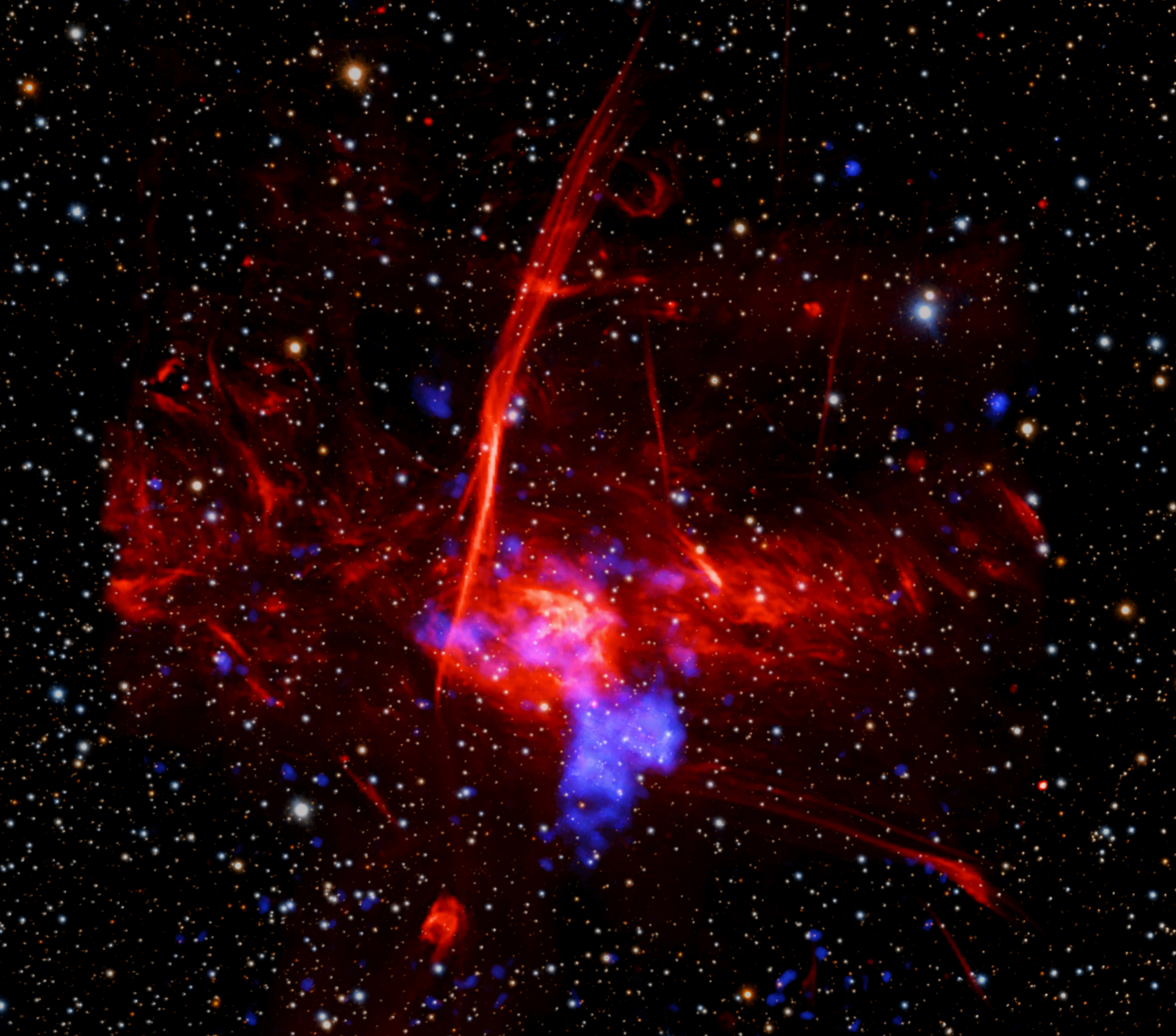
NASA’s Chandra X-ray Observatory may have uncovered a new supernova remnant near the crowded center of the Milky Way, where the evidence is bright, messy, and scientifically irresistible.
Why Chandra is playing detective
Using data from NASA’s Chandra X-ray Observatory, astronomers may have found a supernova remnant in an intriguing neighborhood in the middle of our galaxy. In plain terms: the cosmos pulled a great cosmic mystery prank, and Chandra is the detective with the coolest flashlight.
First, a quick stub of context: a supernova remnant is what’s left after a star ends its life in a spectacular bang (and by spectacular, we mean “all the fireworks, none of the clean-up”). These remnants are like cosmic crime scenes, except the only thing on the witness stand is a cloud of high-energy X-rays and a lot of very old, very dead star dust. Now, thanks to the sharp eyes of Chandra, we might be looking at one of these remnants tucked away in a surprisingly ordinary-sounding part of the Milky Way’s bustling middle.
The galactic center is a noisy neighborhood
What makes this find feel a bit like a celestial treasure hunt? For one thing, the neighborhood isn’t your typical “polite spiral arm with perfectly mapped lanes.” The galactic center is a wild, crowded place—think Times Square, but with more giant black holes and fewer street performers. The team pores over X-ray signals, trying to distinguish the “boom!” of a historic supernova from the everyday grind of high-energy processes in that crowded region. Chandra’s X-ray vision is the proverbial clue-finding flashlight, scanning for the telltale fingerprints of supernova debris: hot, shocked gas; unusual abundances of elements like silicon and sulfur; and the kind of diffuse glow that says, “Yes, something exploded here ages ago.”
As with any good astronomical mystery, the evidence is tantalizing but not definitive enough to declare, “Case closed, it’s a supernova remnant.” Yet the hints line up: a diffuse X-ray glow that’s more than a glow—an energized halo surrounding a still-surprisingly structured core. The geometry, the spectrum, and the rough age estimates can align to tell a story of a star that met its dramatic end somewhere between a few thousand to tens of thousands of years in the past. That’s ancient history for a universe that’s already 13.8 billion years old, but in astronomical terms, it’s still a fresh slice of cosmic memory.
Why another remnant matters
Why should you care if there’s a new supernova remnant in the galactic center? Besides being an irresistible plot twist for space nerds, remnants are like time capsules. They help scientists understand how elements are forged and dispersed, how shock waves ripple through the interstellar medium, and how these processes seed future generations of stars and planets. In other words, the universe’s recycling program gets another, fancier entry in its ledger. And if you like your science with a side of humor, there’s something delightfully cartoonish about imagining a bright X-ray beacon peeking through a thick curtain of gas, as if the cosmos were winking at us from behind a cosmic curtain.
What astronomers need next
Of course, there’s more work to do before this candidate earns its badge as a confirmed supernova remnant. Astronomers will want to rule out alternative explanations, cross-check with data from other wavelengths (radio, infrared, maybe even gamma rays), and refine the age and distance estimates. The middle of the Milky Way is not exactly a quiet neighborhood; it’s a busy, noisy street where many processes can mimic the afterglow of a stellar explosion. Think of it as trying to spot a distant campfire in a crowded festival: you need multiple clues, the right timing, and a bit of patience.
If you’re anxious to know what comes next, you’re not alone. The observation teams are likely to publish more details, and other observatories may join the party to confirm or challenge the findings. The broader takeaway: the cosmic kitchen is always cooking, and some of the most delicious discoveries come from looking at familiar places with new tools. Chandra’s X-ray gaze might have just revealed that even in the galaxy’s bustling center, old stellar death throes leave behind signatures worthy of a second look—and a good chuckle at the sheer audacity of the universe.
So here’s to the ongoing detective work in our cosmic neighborhood: a reminder that the Milky Way, with all its glittering arms and crowded corners, still holds surprising chapters waiting to be read. If this candidate keeps glowing in the right way under the right measurements, we’ll have another stellar chapter in the grand story of how elements—and spectacular stories—populate the cosmos. And if not, well, the night sky still has plenty of other mysteries—and Chandra will be there to shine a light on them, one brilliant X-ray at a time.
© 2026 ways4eu.wordpress.com H.J.Sablotny — All rights reserved. The text content of this post is the intellectual property of H.J.Sablotny. Images are subject to their respective copyright holders and are used for illustration purposes only.