Ways4eu WordPress.com Blog
SPA View of ways4eu.wordpress.com
Why Are Parts of Itokawa’s Surface So Smooth? A Dusty Dive into Rubble Piles and Cosmic Jostling
By Kinda Cool
on Tue Jul 28 2026
Quick Links
Why the surface shifts
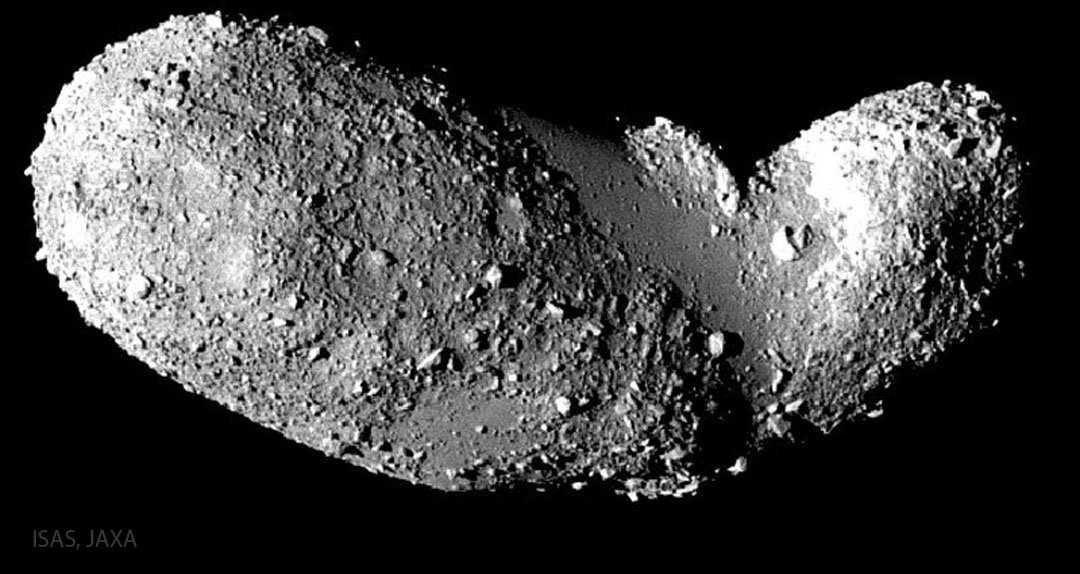
Imagine a rock that’s less a rock and more a cosmic game of Jenga. Meet Itokawa, a small asteroid that doesn’t look like the dusty moon of a science-fiction poster but more like a lumpy, rubble-pile conga line floating in the void. When the Japanese spacecraft Hayabusa swooped in for a visit in 2005, it snapped pictures and notes that turned our picture of asteroids on its head: Itokawa has smooth patches that look suspiciously glossy next to rugged, crater-mouthed scenery. What’s going on here?
The smooth surfaces aren’t a miracle of erosion or some mysterious polish job from the cosmos. They’re a predictable consequence of the asteroid’s own ferociously gentle chaos: a loose pile of rocks, pebbles, and dust held together by gravity and a pinch of cohesion. In other words, Itokawa is not a single monolithic block but a “rubble pile.” When you toss a handful of rubble in microgravity, the grains don’t stay perfectly still. They jiggle and settle, slide and shuffle, especially when the asteroid’s orientation or rotation shifts even a little. Over time, this subtle shuffling can sort the surface materials, pushing larger boulders into certain pockets and leaving smaller grains to polish and fill the spaces between them. The result is the occasional smooth patch that looks almost polished, as if someone took a fine brush to it.
The rubble-pile effect
Researchers have dug into the boundary zones where smooth patches meet rough, cratered terrain and found intriguing clues. The idea that’s gaining traction is a kind of granular demixing—think Brazil nuts in a shaken bottle. In a loosely bound pile of rocks under microgravity, tiny jostles can cause grains to separate by size. Larger rocks migrate up, while smaller grains sift downward along the surface. It’s a slow-motion segregation that shapes the landscape in a way you’d never predict from Earth-based intuition, where gravity and tectonics do most of the heavy lifting.
What Hayabusa found
And then there’s the human-made touch: Hayabusa actually landed on one of those smooth patches, in a region nicknamed the MUSES Sea. The mission wasn’t just a flyby photo op. It collected soil samples from that very smooth patch and shipped them home to Earth. The analyses of these samples have become a treasure chest for understanding the ancient history of Itokawa—and by extension, the early years of our entire Solar System. They’re not just rocks; they’re time capsules, preserving chemistry and minerals that tell stories about how planets and smaller bodies formed, interacted, and evolved in the young solar neighborhood.
But the plot thickens with a splash of cosmic suspense: computer simulations suggest that Itokawa, though small at about 500 meters across, isn’t forever stable in its current orbit. Models imply that it could one day cross paths with Earth in the next few million years. It’s a reminder that even tiny travelers in space carry the potential to influence our own planet, albeit on timescales that dwarf human lifetimes. The thought might be unsettling, but it’s also a testament to the interconnectedness of celestial mechanics—the way a single rubble-clump asteroid can ripple through the solar system’s grand clockwork.
Why Itokawa matters
So, why are some patches on Itokawa so smooth? Because the surface is a dynamic, loosely bound pile of rocks that is constantly shuffled by gentle nifts and wobbles. The smooth areas emerge where the jostling encourages a sorting of particles, much like a Brazilian nut effect in slow motion. The MUSES Sea stands as a tangible proof of this process, offering samples that illuminate the early chapters of the Solar System’s story. And the looming possibility that Itokawa could someday visit Earth again—this time perhaps as a tiny, distant harbinger—adds a dash of cosmic theater to an otherwise quiet, granular drama playing out on the surface of a small asteroid. The more we study it, the more Itokawa teaches us about how small bodies form, evolve, and persist in a universe that loves to keep its rocks in motion.
Image via NASA https://ift.tt/PdoC2I3
© 2026 ways4eu.wordpress.com H.J.Sablotny — All rights reserved. The text content of this post is the intellectual property of H.J.Sablotny. Images are subject to their respective copyright holders and are used for illustration purposes only.