Ways4eu WordPress.com Blog
SPA View of ways4eu.wordpress.com
Curiosity Sees Martian Sulfur Up Close
By Kinda Cool
on Sat Aug 01 2026
Quick Links
A crush and a clue
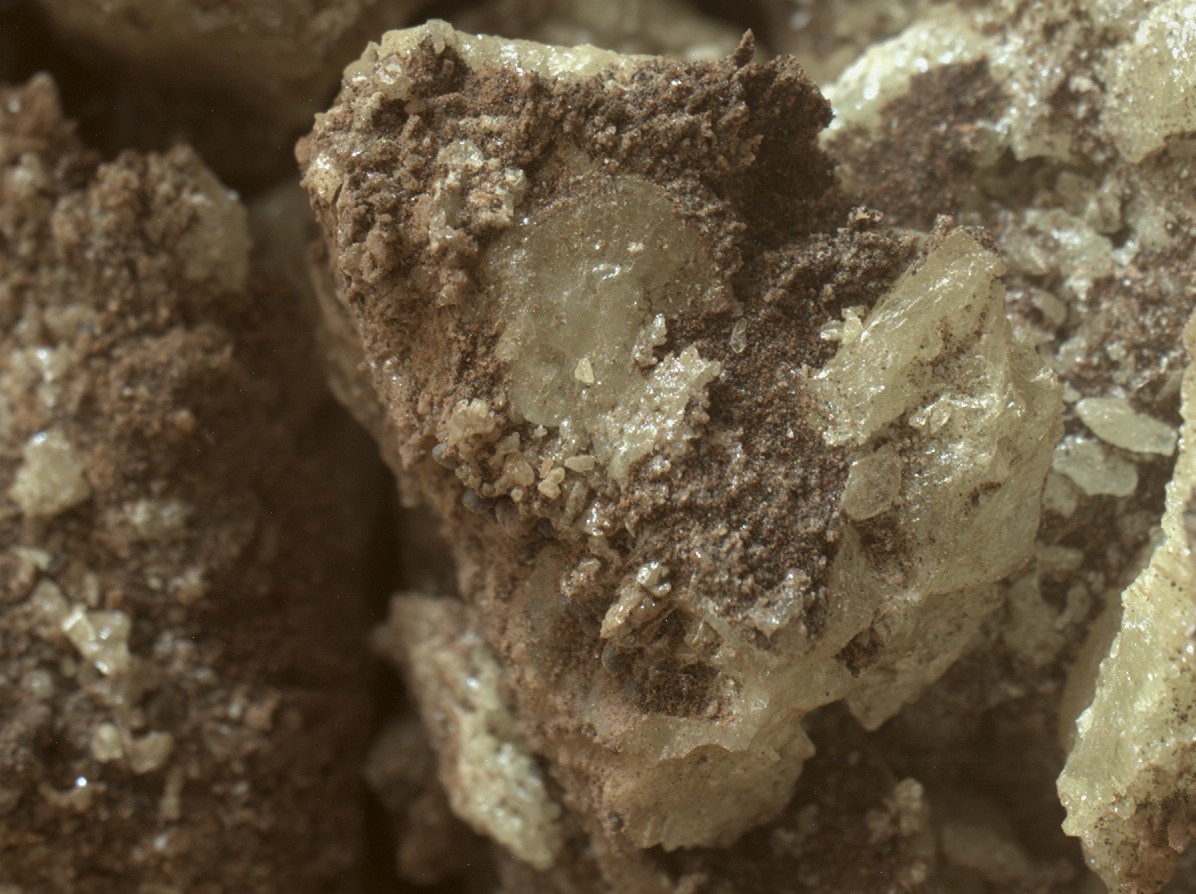
If you’ve ever wondered what happens when a walking, talking rover with a Midwest work ethic and a taste for rocky adventures decides to treat itself to a little “crush and learn,” today is your lucky day. On May 30, 2024—the 4,200th sol of NASA’s Curiosity mission—the Mars rover stumbled upon a rock with a story to tell and a personality to match. After a careful, precisely-engineered nudge, the rock yielded a surprise: sparkling sulfur crystals hiding in its grainy heart. It was like the universe handed Curiosity a science-filled candy shell and said, “Go ahead, crack it open.”
Let’s rewind the moment without getting too dramatic about the dust. Curiosity isn’t exactly a casual rock-hound; it’s a rover with a mission, a camera crew, and a top-tier liability insurance policy with the cosmos. It rolled over this particular rock, pressed its wheels into a planetary drumbeat, and—crunch—a little sulfur confetti tumbled out. If you’ve ever heard a geologist describe a mineral as “delicate,” you’ll appreciate the shock of discovering sulfur crystals after a casual crush. It’s the meteorological version of finding a mint under your sock: unexpected, a little spicy, and absolutely worth noting.
What sulfur reveals
Why sulfur, you ask? On Mars, sulfur is a telltale sign of geological chemistry at work—think of it as Mars whispering its chemical diary to anyone willing to listen (and point a camera at the pages). These crystals aren’t just sparkly souvenirs; they’re clues about the environmental conditions that shaped the rocks, the minerals that formed in their shadows, and the ancient stories of Mars’ dust-and-dirt romance with heat, pressure, and possibly water. Curiosity isn’t chasing glitter; it’s chasing context, provenance, and the “aha” moment when a rock reveals its backstage pass.
The moment was quintessential Curiosity: methodical, slightly clumsy in the most endearing way, and totally dedicated to turning a simple hike into a theater of discovery. The rover’s instruments, built to survive interplanetary road trips and the occasional existential weathering, did their job with the efficiency of a well-oiled, space-age citrus juicer. A careful analysis confirmed the sulfur crystals weren’t stray house guests but genuine features of the rock’s inner chorus. The team back on Earth—housed in a lab that smells faintly of coffee and triumph—poured over spectral data, imaging, and the kind of nerdy excitement only a planetary scientist can muster when a rock finally reveals its sparkly secret.
Why Curiosity keeps mattering
If you’re picturing a grand reveal, you’re not far off. The sulfur crystals are a small detail, but in planetary science, small details can shout the loudest. They corroborate theories about volcanic activity, hydrothermal processes, or acid-salt chemistry that may have danced across the Martian surface billions of years ago. Each crystal is a microcosm—a microscopic diary entry from a planet that, for now, keeps most of its secrets tucked away behind red dust and canyon walls. Curiosity didn’t just find a pretty rock; it found a diary page worth annotating, a clue worth filing, and a reminder that the universe still loves a good rock-tumble story.
The lighter side of the tale is the sheer joy of science in motion. Here’s a rover rolling over a rock, doing a routine, almost mundane task, and out pops something that makes scientists lean closer, blink a few times, and whisper, “Yep, still got it.” It’s a reminder that curiosity—true, stubborn, joyful curiosity—turns ordinary moments into extraordinary ones. The rocks aren’t posing for a selfie, but Curiosity is: camera at the ready, a wheeled confessional, chronicling the tiny triumphs that collectively map the grand arc of Mars exploration.
What happens next? The sulfur crystals are likely to become part of a larger suite of analyses, cross-checked against images, spectroscopy, and perhaps even a little isotope detective work. The goal isn’t to write a finish line on a chalkboard and call it a day; it’s to assemble a mosaic of Mars’ past, layer by layer, crystal by crystal. Each discovery nudges our understanding forward, inviting fresh hypotheses and, frankly, a Democracy-like sense of shared wonder among scientists, engineers, and space enthusiasts everywhere.
Why the small find feels big
For readers at home, the takeaway isn’t a jaw-dropping reveal of a single mineral. It’s a reaffirmation: curiosity pays off in patient, careful observation. Curiosity didn’t race to Mars to claim a blockbuster find; it rolled, it sampled, it paused, it reflected, and it shared. The sulfur crystals are a note in Mars’ long symphony—the kind of note that suggests there’s more to the melody than the drums of the rover’s wheels. And as long as Curiosity keeps listening, recording, and sharing, we get front-row seats to a concert that spans not just miles of Martian terrain, but the entire arc of human curiosity.
So here’s to the little things that spark big questions. Here’s to a rock that yielded a glittering surprise after the most ordinary of actions. Here’s to a rover that treats a daily drive as a doorway to wonder. And here’s to the sulfur crystals—quiet, radiant, and wonderfully stubborn in their hint that Mars, in all its red glory, still has stories worth telling, one sparkly crystal at a time.
SourceLink via NASA
© 2026 ways4eu.wordpress.com H.J.Sablotny — All rights reserved. The text content of this post is the intellectual property of H.J.Sablotny. Images are subject to their respective copyright holders and are used for illustration purposes only.