Ways4eu WordPress.com Blog
SPA View of ways4eu.wordpress.com
The Mare Orientale: A Western Edge Mystery, Eastern Name, and a Moonlit Lark
By Kinda Cool
on Sat Aug 01 2026
Quick Links
- A basin that hides in plain sight
- Rings, ripples, and libration
- Why the Eastern Sea sits in the west
- A lunar lesson in perspective
A Basin That Hides in Plain Sight
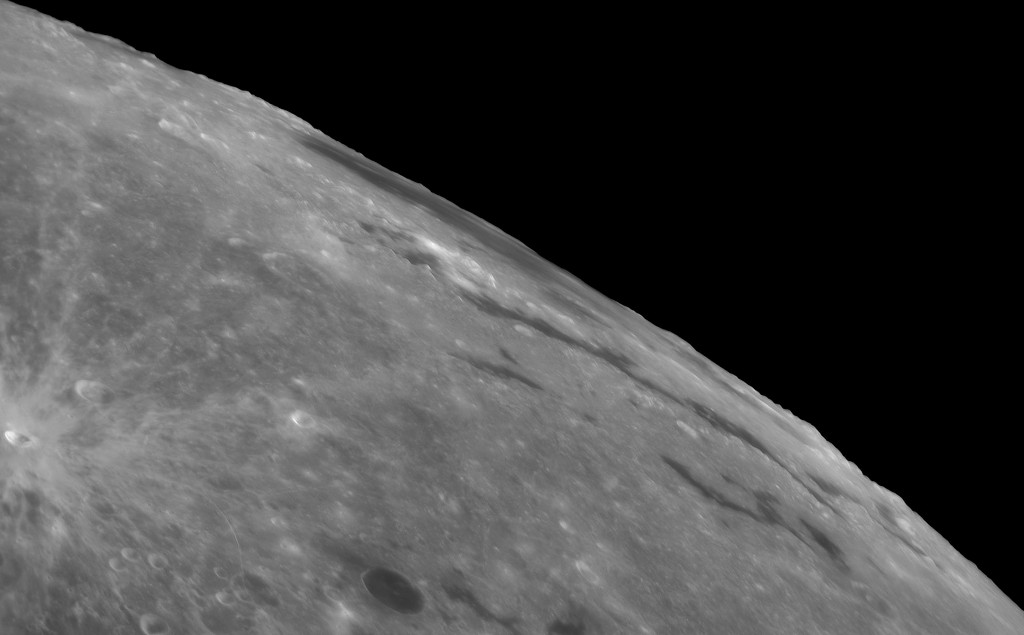
The Mare Orientale, or Eastern Sea, is one of the Moon’s youngest and grandest major impact basins, spanning about 1,000 kilometers across.
The Mare Orientale — Latin for Eastern Sea — is one of the grand, canvas-sized features that make our Moon feel both intimate and confounding at the same time. It’s a geological opera staged on a planetary scale, with a plot twist that would make any mapmaker raise an eyebrow. Let’s wander through its story, with a wink, because astronomy loves a good paradox as much as a good crater.
First, the scene-setting. The Mare Orientale is among the youngest of the Moon’s major impact basins. It isn’t a dainty blemish; it’s a colossal basin that forms a circle of awe about 1,000 kilometers across. But here’s the rub: from Earth, it’s a tricky character to spot. The Moon’s own tilt and libration — the Earth-Moon dance that lets us peek at slightly different faces — occasionally grants us a brief, flattering angle. On July 7, during a spell of favorable libration, the Eastern Sea does reveal itself in a sharp telescopic view, tucked toward the upper right of the nearside. In that moment, the Mare Orientale presents itself as a foreshortened panorama, a long, waning arc hugging the Moon’s western edge, almost as if it’s peeking around a lunar curtain.
Rings, Ripples, and Libration
What you’re seeing in those evocative images is not just smooth basalt plains, the “mare” in lunar terms. It’s the signature of a colossal ancient impact that set off concentric rings, like ripples on a pond hammered into the Moon’s crust. This basin formed more than 3 billion years ago, born from an asteroid collision that could have wiped out a city and then some. The structure spans roughly the distance of North America and Europe laid end to end and bears rings that echo outward, a planetary fingerprint of a blast that rearranged the Moon’s topography on a grand scale.
Yet, there’s a delightful irony baked into the geography of the Orientale. When you grab a more direct, orbital image of the region, the concentric rings pop with clarity — the ripples in the crust are more easily perceived from the vantage point of lunar orbit. From Earth’s slow gaze, the same rings lurk, hidden by geometry and perspective. It’s a reminder that visibility on the Moon is as much about where you stand as what you’re looking at, and sometimes the most striking features demand a little orbital altitude to appreciate fully.
Why the Eastern Sea Sits in the West
So why is the Eastern Sea, with a name that promises an eastern horizon, perched on the Moon’s western lip? The simple, almost mischievous answer lies in history and labeling. The Mare Orientale’s name was bestowed before 1961, a time when lunar cartography followed conventions that categorized and labeled east and west differently than we do today. The cartographers, with their trusty compasses and stubborn resolve, labeled features in a way that felt natural then, but which later mapmakers treated as the wrong way round once the conventions shifted. The result is a celestial paradox: a feature named the Eastern Sea sits, in our modern frame, near the Moon’s western edge. It’s a cartographic joke that survived the centuries, reminding us that language, like astronomy, travels through time with its quirks intact.
A Lunar Lesson in Perspective
If you’re tempted to view the Mare Orientale as merely a pretty iris of the Moon’s surface, you’re selling a spectacular story short. It’s a monument to cataclysm and a masterclass in perspective: how a planetary feature so vast can hide in plain sight, and how our maps can twist names as easily as we twist our necks for a better view. And isn’t that a quintessentially lunar sentiment? The Moon gives us awe, and then it teases us with a riddle about direction, time, and the stubborn stubbornness of old maps.
In the end, the Mare Orientale remains one of the solar system’s most striking, large-scale features — an enormous basin of ancient fire and quiet complexity. It is a reminder that the cosmos loves to turn our assumptions on their heads, even as it invites us to look more closely. So next time you catch a glimpse of the Eastern Sea on the Moon’s far edge, remember the libration that offered the view, the rings that reveal themselves from above, and the old naming conventions that keep our astronomy playlists pleasantly paradoxical. The Moon, in its patient, cratered way, keeps writing its own witty footnotes in the sky.
MediaLink via NASA
Copyright Notice: The image and referenced source content remain the property of their respective creators and rights holders. They are used here solely for commentary, discussion, and informational purposes. Please visit the original source links for attribution and additional information.
© 2026 ways4eu.wordpress.com – H.J. Sablotny. All rights reserved. The text content of this article is the intellectual property of H.J. Sablotny and may not be reproduced, distributed, or republished without permission. Images remain the property of their respective copyright holders and are used for illustrative and commentary purposes only.