Ways4eu WordPress.com Blog
SPA View of ways4eu.wordpress.com
M24: A Window into the Milky Way’s Dusty Frontier
By Kinda Cool
on Sun Aug 02 2026
Quick Links
Not a Cluster, Not a Galaxy, but a Gap
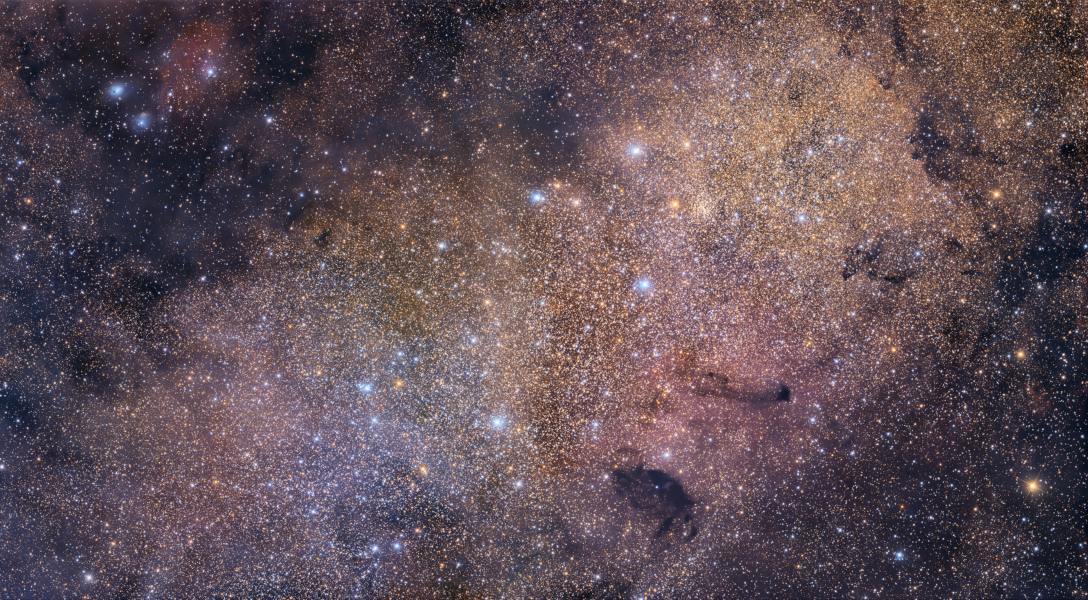
Unlike most entries in Charles Messier’s famous catalog of deep-sky objects, M24 is not a bright galaxy, star cluster, or nebula. It’s something rarer and more intriguing: a gap in nearby interstellar dust clouds that acts like a natural viewing window into the heart of our own Milky Way. Through this slender corridor, the distant stars along the Sagittarius spiral arm come into view, reminding us that the cosmos is as much about what you can glimpse through a tear in the veil as what you see in full daylight.
Look with a modest pair of binoculars or a small telescope, and you’re peering through a window over 300 light-years wide. Beyond that glassy pane lies a tapestry of stars some 10,000 light-years or more from Earth, arranged in patterns that our solar neighborhood can only imagine. It’s a reminder that the sky isn’t a flat ceiling of glittering points but a dynamic, layered structure—a galaxy within a galaxy, a spiral arm eclipsed by dust except in the thin gaps where light can slip through.
What the Window Reveals
M24 is sometimes called the Small Sagittarius Star Cloud, and rightly so. The luminous stars that populate the gap stretch across this stunning interstellar scene, giving us a panoramic taste of what lies beyond the dusty veil. It’s as if nature has carved a celestial window, and we are invited to lean in, adjust our optics, and let the Milky Way reveal its hidden depth.
Stretching across more than four full moons’ worth of sky in the direction of the constellation Sagittarius, the field of view through a telescope can feel almost cinematic. Within this expansive panorama, dark markings labeled B92 and B93 appear near the center of M24. They’re not singular objects in their own right but signatures of denser pockets of dust drifting through the plane of the galaxy. Alongside them, other clouds of dust and glowing nebulae inhabit the central regions of the Milky Way, offering a layered chorus of light and shadow that hints at the complex life cycle of stars and the interstellar medium.
How to Observe M24
If you’re planning a stargazing session, here are a few tips to maximize your encounter with M24:
- Start with a low-power setup. A wide field of view helps you appreciate the scale of the gap and the star cloud within it.
- Use a dark, moonless night. The Milky Way is bright enough in the foreground; you’ll want to keep the foreground stars sharp while letting the dusty lanes fade into the background when you squint through the interstellar curtain.
- Scan slowly. Let your eyes drift along the gaps where light from distant stars slips through, and you’ll notice how the brightness of the stars changes as the backdrop of dust shifts from clear to opaque.
- Bring a sketchpad or astro-imaging app. M24 is as much a mental map as a visual one: tracing the bright concentrations of stars against the shadowplay of dust helps you internalize the scale of our galaxy.
Why the View Matters
What makes M24 so compelling isn’t just what we see, but what it reveals about how we see. It’s a reminder that the Milky Way isn’t a single, bright thread of stars but a complex weave where dust, gas, and stars coexist. The “window” of M24 provides a rare, intimate look at that weave—a reminder that our galaxy is constantly reshaped by the dance of light, matter, and gravity.
So next time you raise your binoculars to the sky and turn toward Sagittarius, pause at the gap in the dust. Through it, you’re not merely observing distant stars—you’re peering into a living cross-section of our own galaxy’s spine. It’s a tiny, shimmering doorway in the vastness, and it’s waiting for you to look through.
MediaLink via NASA
Copyright Notice: The image and referenced source content remain the property of their respective creators and rights holders. They are used here solely for commentary, discussion, and informational purposes. Please visit the original source links for attribution and additional information.
© 2026 ways4eu.wordpress.com – H.J. Sablotny. All rights reserved. The text content of this article is the intellectual property of H.J. Sablotny and may not be reproduced, distributed, or republished without permission. Images remain the property of their respective copyright holders and are used for illustrative and commentary purposes only.