Ways4eu WordPress.com Blog
SPA View of ways4eu.wordpress.com
NGC 474: The Quiet Giant with a Rippled Secret
By Kinda Cool
on Mon Aug 03 2026
Quick Links
- A galaxy with a secret outline
- Shells, ripples, and tidal memories
- Why elliptical galaxies are messier than they look
- What NGC 474 says about galactic growth
A Galaxy with a Secret Outline
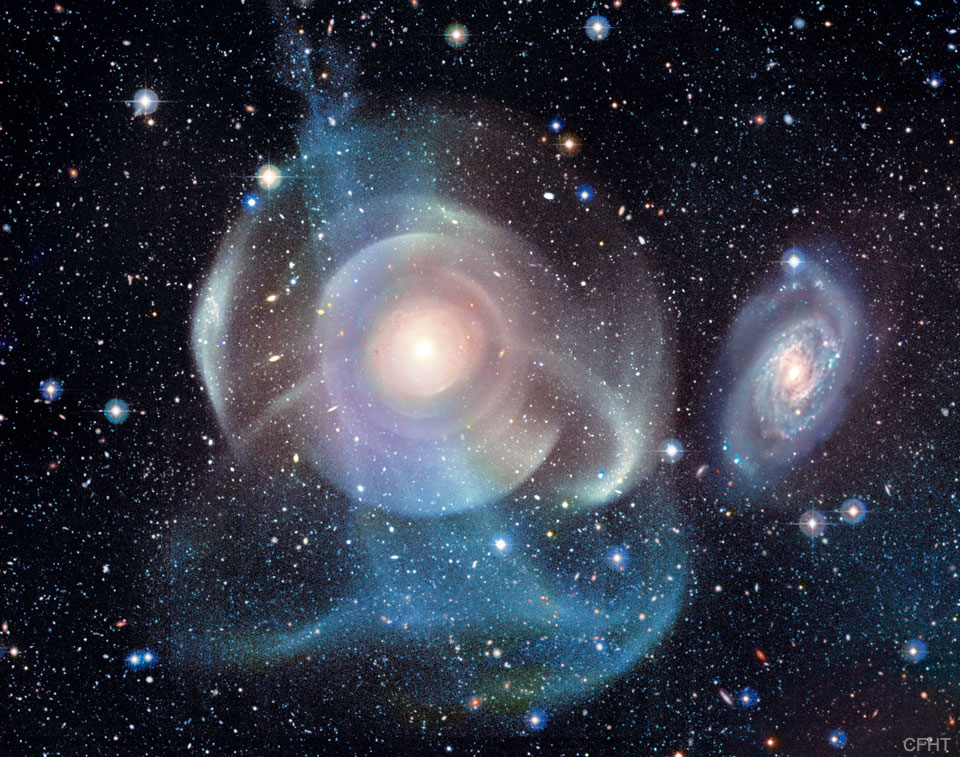
What’s happening to galaxy NGC 474? The answer isn’t a single punchline, but a chorus of clues that makes this seemingly featureless elliptical galaxy feel like it just stepped out of a cosmic detective novel. In deep, long-exposure images—where the universe reveals the faintest glimmers—the multiple layers of emission around NGC 474 appear almost comically intricate. It’s as if a quiet, unassuming neighbor has been hosting secret galactic parties for a billion years, and the photos finally caught the guest list.
Shells, Ripples, and Tidal Memories
The shells around NGC 474 aren’t random doodles on a cosmic whiteboard. The leading ideas about their origin are as intriguing as the shells themselves. One school of thought treats these wisps as tidal tails—relic debris left over from the accretion of numerous small galaxies over the last billion years. If you’ve ever watched a pond after a stone is dropped, these features resemble pale, shimmering ripples left by gravitational interactions, slowly shaping the outskirts of the galaxy as smaller companions are tugged in, torn apart, and diffused into the stellar halo.
Another charming possibility likens the shells to ripples in a cosmic pond caused by an ongoing duet with a neighboring spiral galaxy. In this scenario, a subtle, ongoing collision sends density waves coursing through the vast stellar seas of NGC 474. The resulting shells, arcs, and swirls aren’t mere adornments; they’re living fossil murals that encode the history of gravitational encounters and internal dynamics that have sculpted the galaxy over eons.
Why Elliptical Galaxies Are Messier Than They Look
Regardless of the exact mechanism, the featured image underscores a broader trend: the halos of some elliptical galaxies are far more complex than their smooth, featureless portraits suggest. This is a candid reminder that the peripheries of big galaxies are dynamic, messy, and full of history—quietly narrating chapters of mergers, migrations, and gravitational dances that unfold over billions of years.
If you want a relatable parallel, look to our own Milky Way. Our galaxy’s halo is also an intricate tapestry, woven with streams of stars and relics from past mergers. The Milky Way isn’t a pristine orb; it’s a layered, evolving structure with substructure that reveals how galaxies grow by cannibalizing their neighbors—one interrupted orbit at a time.
What NGC 474 Says About Galactic Growth
A quick snapshot of NGC 474 helps ground the wonder: this galaxy spans roughly 250,000 light-years across and sits about 100 million light-years away, toward the curious constellation Pisces. That distance, by cosmic standards, is a comfortable shyness—far enough that faint features barely register in casual images, yet close enough that modern telescopes can tease out the faint whispers of its past.
The broader takeaway is surprisingly simple: when we lift the veil with deeper imaging, the universe doesn’t reveal a neat, static catalog of shapes. It reveals a dynamic gallery where galaxies are active, evolving participants in a grand gravitational ballet. NGC 474 is a testament to that truth—a quiet elliptical now seen with the drama and texture that only deeper stares can provide.
So, what’s happening to NGC 474? It’s a chorus of possibilities, each note a clue about how galaxies grow and interact. Whether tidal debris from long-ago accretions or ripples from a near-encounter with a neighbor, the shells remind us that galactic halos are not mere outskirts but archives—frozen yet still whispering stories of cosmic encounters, mergers, and the slow, sculpting hand of gravity. And in that whisper, we hear a familiar message: the universe loves complexity, even when appearances seem deceptively simple.
MediaLink via NASA
Copyright Notice: The image and referenced source content remain the property of their respective creators and rights holders. They are used here solely for commentary, discussion, and informational purposes. Please visit the original source links for attribution and additional information.
© 2026 ways4eu.wordpress.com – H.J. Sablotny. All rights reserved. The text content of this article is the intellectual property of H.J. Sablotny and may not be reproduced, distributed, or republished without permission. Images remain the property of their respective copyright holders and are used for illustrative and commentary purposes only.