Ways4eu WordPress.com Blog
SPA View of ways4eu.wordpress.com
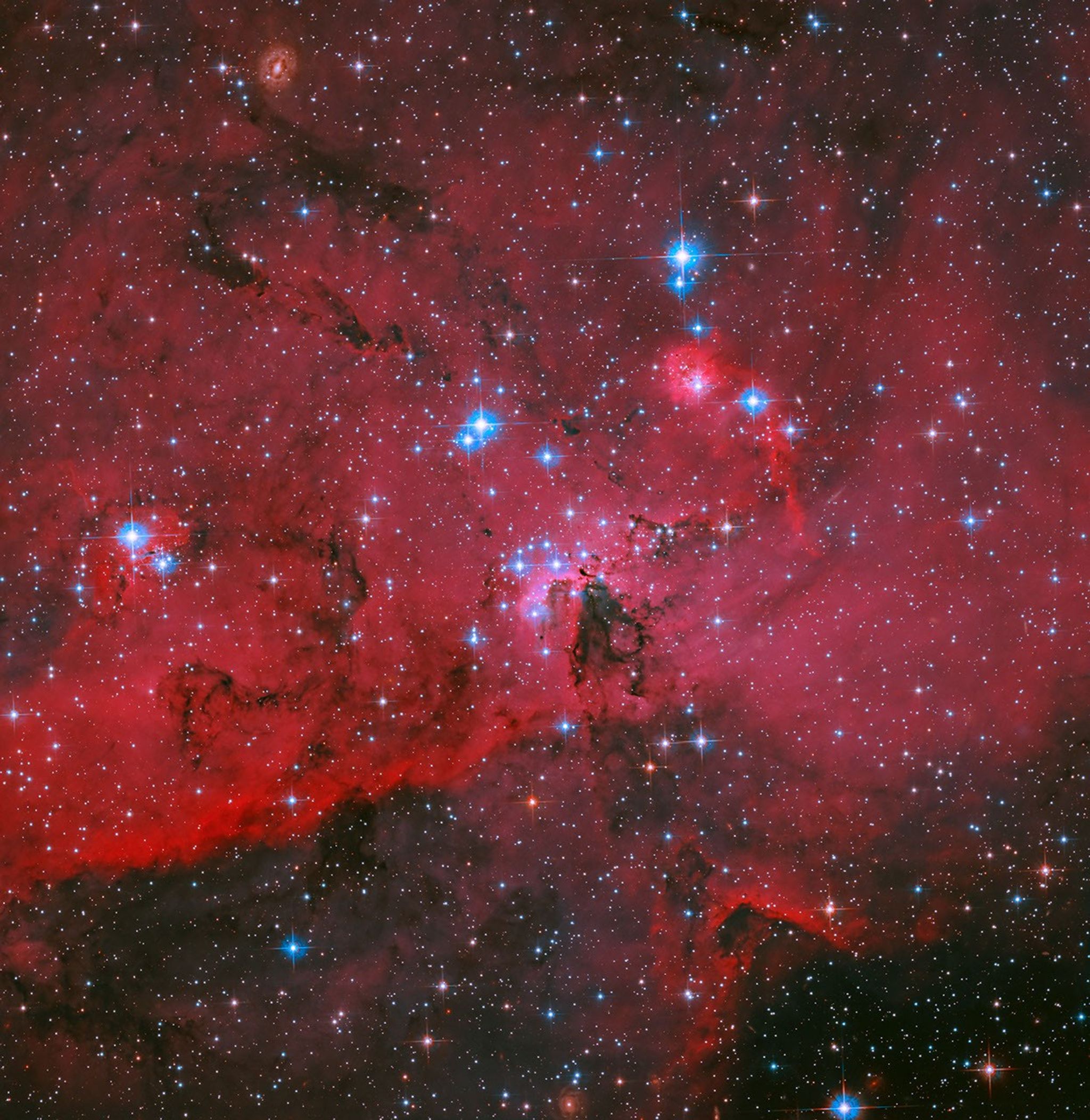
Hubble Sees Crimson Cloud and Stars: A Cosmic Glow-Up in LH 95
By Kinda Cool
on Wed Aug 05 2026
Quick Links
- A crimson party in the Large Magellanic Cloud
- What the glow is made of
- LH 95 as a stellar laboratory
- Why the scene matters
A Crimson Party in the Large Magellanic Cloud
The LH 95 region in the Large Magellanic Cloud glows with gas and dust lit by a thriving population of young stars. It’s the kind of scene that reads like a space-age glow-stick party.
In this vibrant corner of the universe, the gas and dust aren’t just passive background scenery. They’re the warm-up act for a stellar main event. The interstellar medium in LH 95 sizzles with energy as newborn stars pump out ultraviolet light, energizing the surrounding nebulae and turning them into glowing fingerprints of star formation.
What the Glow Is Made Of
Hubble’s sharp eye reveals a tapestry of crimson and amber that can only come from young, hot stars heating the surrounding material. The crimson cloud isn’t a menacing monster; it’s a living, breathing nursery where gravity does its own kind of quiet magic. The light from these fledgling suns bounces off gas and dust, sculpting delicate filaments and bright pockets that look almost painterly.
If you’re wondering about the “crimson” in the crimson cloud, you’re not alone. The color comes from ionized hydrogen gas, blasted into a glowing state by ultraviolet radiation from hot, young stars. The result is a cloud that looks almost like it’s on fire, minus the scorch marks and the need for a fire extinguisher.
LH 95 as a Stellar Laboratory
But we’re not just looking at pretty colors and shapes. This star-forming region is a dynamic laboratory for understanding how stars and clusters emerge from the cosmic soup. The young stars inject energy, churn the gas with winds, and sometimes pull in material to keep their own growth going. It’s a feedback loop that can regulate how many stars end up thriving in a given pocket of space.
LH 95’s glowing landscape also offers clues about the Large Magellanic Cloud’s broader story. The LMC is a nearby irregular galaxy, a bit scrappy in its metal content and history, which makes it a fantastic natural laboratory for studying star formation under different chemical conditions than our Milky Way.
Why the Scene Matters
For science fans and casual skywatchers alike, LH 95 is a reminder that the universe loves a good glow-up. The glowing gas, the radiant stars, and the sculpted dust all participate in a synchronized choreography that turns a quiet patch of space into a dazzling, evolving artwork. Hubble’s observation captures not just a moment in time, but a snapshot of ongoing stellar genesis.
So next time you hear a science-y whisper about distant star-forming regions, picture LH 95: a crimson cloud lights up, stars rise from their stellar cradle, and the Large Magellanic Cloud shows off its best red-carpet glow. It’s not just a pretty picture; it’s a live-action postcard from one of the universe’s most ambitious construction sites.
MediaLink via NASA
Copyright Notice: The image and referenced source content remain the property of their respective creators and rights holders. They are used here solely for commentary, discussion, and informational purposes. Please visit the original source links for attribution and additional information.
© 2026 ways4eu.wordpress.com – H.J. Sablotny. All rights reserved. The text content of this article is the intellectual property of H.J. Sablotny and may not be reproduced, distributed, or republished without permission. Images remain the property of their respective copyright holders and are used for illustrative and commentary purposes only.