Ways4eu WordPress.com Blog
SPA View of ways4eu.wordpress.com
Why Is This Asteroid a Double? Hayabusa2’s Two-Lobed Surprise and a Sneaky Fast Rotator on the Horizon
By Kinda Cool
on Wed Aug 05 2026
Quick Links
- Hayabusa2 gets a better look
- Two lobes, boulders, and few craters
- How Torifune may have formed
- Why KY26 keeps the story going
Hayabusa2 Gets a Better Look
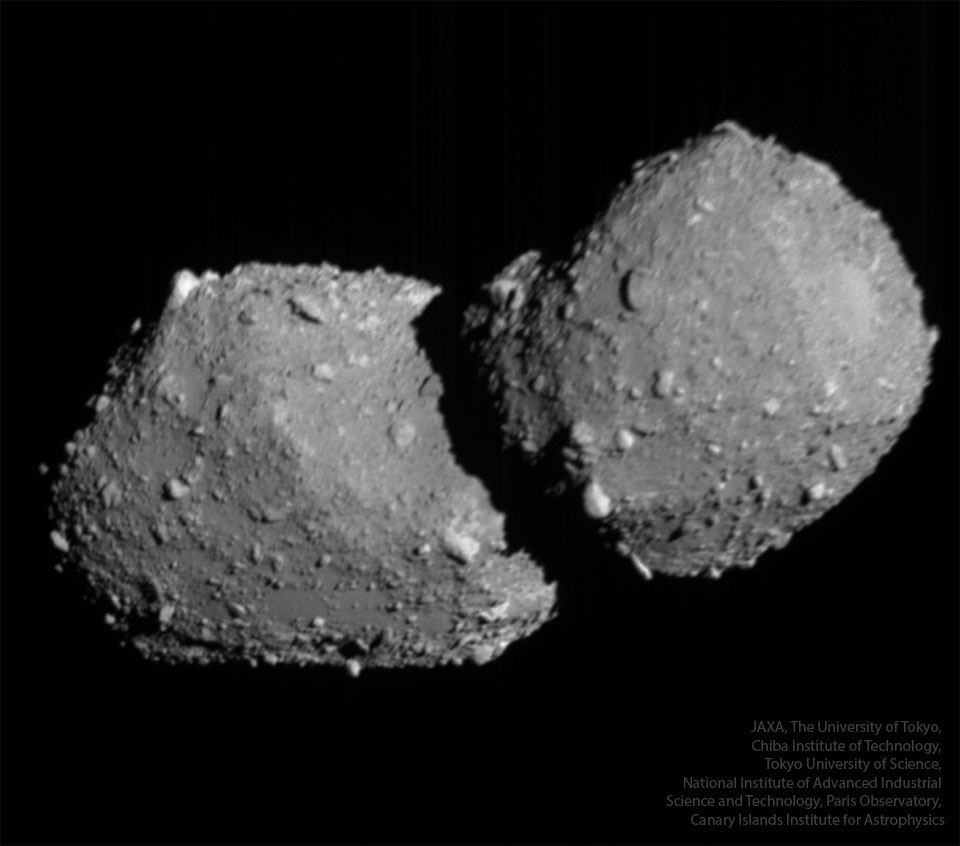
Early this month, the Japanese robotic explorer Hayabusa2 zipped past asteroid 98943 Torifune and brought back high-fidelity snapshots that changed the story. What looked like one slightly elongated rock from Earth turned out, up close, to be a double: two joined lobes fused in a celestial embrace.
Size-wise, Torifune stretches to about four soccer fields end-to-end. That’s a respectable chunk of space rock—big enough to make headlines, small enough to dodge the “planet killer” label. Its orbital dance brings it near Earth on occasion, but scientists emphasize that Torifune is not a threat. It’s just unusually photogenic and a bit of a weirdo in the best possible way.
Two Lobes, Boulders, and Few Craters
Beyond the double-lobed silhouette, Torifune carries a treasure trove of large boulders dotting its surface. You’d expect a crater-rich canvas, given the cosmic rain of micrometeorites over eons, but here’s the twist: there are surprisingly few craters. The surface looks like a jumble of rubble, a loose pile of rock and gravel that’s somehow managed to hold together. It’s a reminder that not all small bodies in the solar system are tidy spheres of dust; some are rugged, reassembled sculptures forged from the chaos of collisions and gravity’s gentle nudge.
How Torifune May Have Formed
The most satisfying part of Torifune’s story is the hint about its formation. The emerging view is that each lobe likely formed separately, in their own mini-microgravity nurseries, before a fateful collision stitched them into one object. Think of two rocks growing side by side in a cosmic workshop, finally deciding to fuse rather than compete for space—and then remaining stubbornly attached like a pair of endearing conjoined cousins.
This is not Hayabusa2’s first rodeo with asteroid variety. The mission already reshaped our imaginations with its encounter with Ryugu in 2018, delivering data and samples that kept researchers busy for years. Double-lobed asteroids like Torifune challenge our assumptions about how small bodies form and evolve. They reveal that even in the vast emptiness of space, collisions and mergers leave lasting fingerprints.
Why KY26 Keeps the Story Going
As we look ahead to 2031, Hayabusa2’s planned rendezvous with 1998 KY26 adds another layer of intrigue. KY26’s rapid rotation and possible ice reservoirs invite questions about how such bodies store and move volatile materials in the solar system’s inner reaches. If fresh observations confirm unexpected features, we could be opening doors to new ideas about resource potential, astrobiology possibilities, and the dynamic storytelling of our solar neighborhood.
In the end, Torifune’s twin lobes give us a fresh reminder: in space, nothing is ever simply one thing. It’s not just a rock; it’s a study in duality, a snapshot of how local conditions and collision histories sculpt the smallest worlds into shapes both familiar and surprising.
MediaLink via NASA
Copyright Notice: The image and referenced source content remain the property of their respective creators and rights holders. They are used here solely for commentary, discussion, and informational purposes. Please visit the original source links for attribution and additional information.
© 2026 ways4eu.wordpress.com – H.J. Sablotny. All rights reserved. The text content of this article is the intellectual property of H.J. Sablotny and may not be reproduced, distributed, or republished without permission. Images remain the property of their respective copyright holders and are used for illustrative and commentary purposes only.