Ways4eu WordPress.com Blog
SPA View of ways4eu.wordpress.com
A Splash Landing in the Utah Desert: When NASA’s Sun-Talking Capsule Took the Scenic Route
By Kinda Cool
on Thu Aug 06 2026
Quick Links
- A capsule returns with drama
- What Genesis went out to collect
- The crash that did not end the science
- Why the samples still mattered
A Capsule Returns with Drama
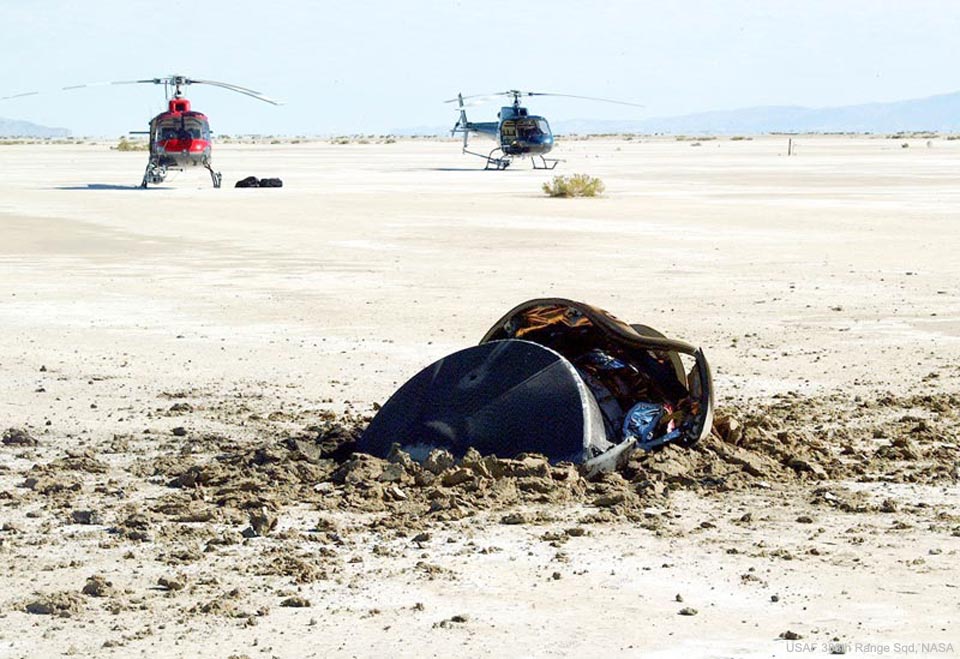
Picture this: a quiet Utah desert, a midnight-blue sky, and the unmistakable whirr of helicopters circling like overzealous hummingbirds. In 2004, the state got a front-row seat to a show that sounded more like a sci-fi blockbuster than a routine science mission. A flying saucer from outer space? Not exactly. A painstakingly precise piece of human ingenuity that decided to take the scenic route home—via a crash landing.
What Genesis Went Out to Collect
The tale begins with a bit of misdirection and a lot of radar. The Genesis sample return capsule, part of NASA’s 2001 Genesis mission, had been sent into space to gather particles from the solar wind. The goal was simple in concept and ambitious in execution: bring back pristine cosmic breadcrumbs from the Sun so scientists could study our star’s composition more directly.
The Crash That Did Not End the Science
For reasons that still echo through mission reports, the parachutes did not deploy as planned. The result was a landing at over 300 kilometers per hour, a velocity that would make any spectator blink and re-check the specs. The capsule didn’t exactly skim the desert floor with the grace of a swan; it embraced it with the unapologetic slam of a meteorite’s cousin. And yet, in a twist that would please any scientist worth their lab notebook, many of the delicate return samples remained in good enough condition to be analyzed.
When the dust settled, the recovered materials offered a treasure trove for solar science. Genesis-related discoveries included new details about the composition of the Sun and how the abundance of certain elements differs across the Solar System.
Why the Samples Still Mattered
The implications reach into the big questions: how did the Sun and planets coalesce from the same primordial disk billions of years ago? What ingredients did our cosmic neighborhood borrow from and shed as it matured? There’s a certain poetry to the idea that a spacecraft designed to study the Sun could take a messy shortcut back to the desert, bounce, and still contribute to our understanding of the solar system’s birthplace.
So, what’s the takeaway from a crash-landing capsule with a mission that asked the Universe for a closer look at the Sun? It’s this: even when the path home isn’t textbook perfect, the pursuit of knowledge presses on. The Genesis samples survived the wild ride, the science team kept digging, and the findings added nuance to our picture of solar composition and planetary formation.
MediaLink via NASA
Copyright Notice: The image and referenced source content remain the property of their respective creators and rights holders. They are used here solely for commentary, discussion, and informational purposes. Please visit the original source links for attribution and additional information.
© 2026 ways4eu.wordpress.com – H.J. Sablotny. All rights reserved. The text content of this article is the intellectual property of H.J. Sablotny and may not be reproduced, distributed, or republished without permission. Images remain the property of their respective copyright holders and are used for illustrative and commentary purposes only.