Ways4eu WordPress.com Blog
SPA View of ways4eu.wordpress.com
Is This a Fossilized Turtle on Mars? Not Quite—Just a Very Dramatic Rock Ode
By Kinda Cool
on Sat Aug 08 2026
Quick Links
- Not a turtle, just a photogenic outcrop
- Why Miraflores stayed standing
- Layers, sand, and groundwater clues
- What the rock says about Mars
Not a Turtle, Just a Photogenic Outcrop
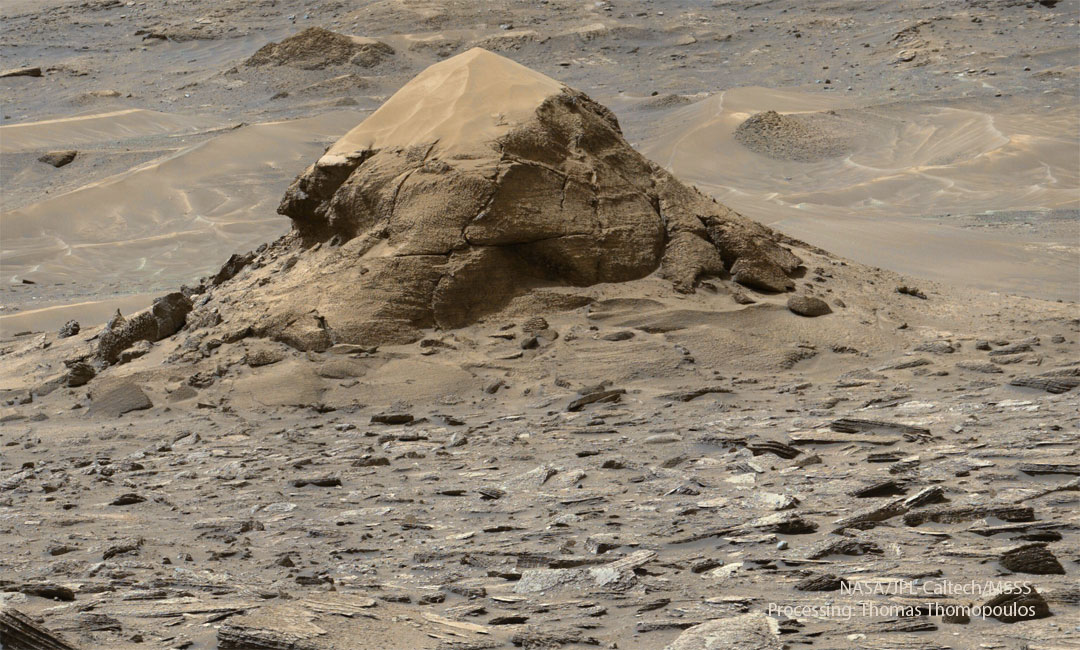
Is this a fossilized turtle on Mars? No. Although it bears a striking resemblance to a large Earth tortoise posing for a Martian family portrait, this is not a shelled relic of an ancient spacefaring reptile. It’s a layered rock outcrop on Mars, and if you squint just right, you might imagine a shell, but what you’re really seeing is geology with a sense of drama.
This curious mound, nicknamed Miraflores, presented itself to NASA’s Curiosity rover during its 4922nd Martian day of exploring the red planet.
Why Miraflores Stayed Standing
Picture a small but sturdy butte standing against the desert wind, carved by time rather than by any living creature. Its longevity likely owes to a fortunate combination: the rock that forms Miraflores was more resistant to erosion than the rock around it, allowing this feature to survive when its neighbors wore away.
In the more recent days of Martian weather—an atmosphere that has a soft spot for dust and dunes—the top of Miraflores has acquired a new sandy passenger. Wind has deposited orange Martian sand atop the formation, giving the summit a sun-kissed, otherworldly cap.
Layers, Sand, and Groundwater Clues
If you peer below the cap, you’ll see a telltale history etched into the rock: multiple layers of stratified material, stacked like a geological bookshelf. These layers hint at a long, intermittent flirtation with wind-blown sand that was carried in, laid down, and then cemented over time by groundwater. It’s a narrative carved in stone, suggesting climate swings and episodic water activity that shaped the surface long before Curiosity rolled into view.
Earth offers a few cousins to this Martian story. Wind-eroded layered landforms such as yardangs show that air, sand, and rock can collaborate to create striking forms. The Martian version tells a parallel tale, one world where wind and water have each left fingerprints on the landscape.
What the Rock Says About Mars
Curiosity, along with Perseverance, continues to piece together Mars’s ancient history. Every rock, every grain of dust, every layered cut into a cliff face is a clue in the puzzle of how Mars warmed, cooled, dried, and perhaps even hosted fleeting moments that might resemble life’s building blocks.
So next time you scroll past photos of the Martian surface, give Miraflores a nod. It’s not a fossil turtle, but a layered, windswept, orange-topped monument to Mars’s layered past—and a prompt to keep asking what stories the rocks of Mars are still waiting to tell.
MediaLink via NASA
Copyright Notice: The image and referenced source content remain the property of their respective creators and rights holders. They are used here solely for commentary, discussion, and informational purposes. Please visit the original source links for attribution and additional information.
© 2026 ways4eu.wordpress.com – H.J. Sablotny. All rights reserved. The text content of this article is the intellectual property of H.J. Sablotny and may not be reproduced, distributed, or republished without permission. Images remain the property of their respective copyright holders and are used for illustrative and commentary purposes only.