Ways4eu WordPress.com Blog
SPA View of ways4eu.wordpress.com
How Martian Auroras Do the Funky Moon-Waltz (Without Losing Their Atmosphere)
By JohnTheWordWhirlwind
on Sat Aug 15 2026
Quick Links
- Solar storms meet thin air
- Ions, electrons, and a different kind of light show
- Why auroras matter for atmosphere loss
- What MAVEN keeps teaching us
Solar Storms Meet Thin Air
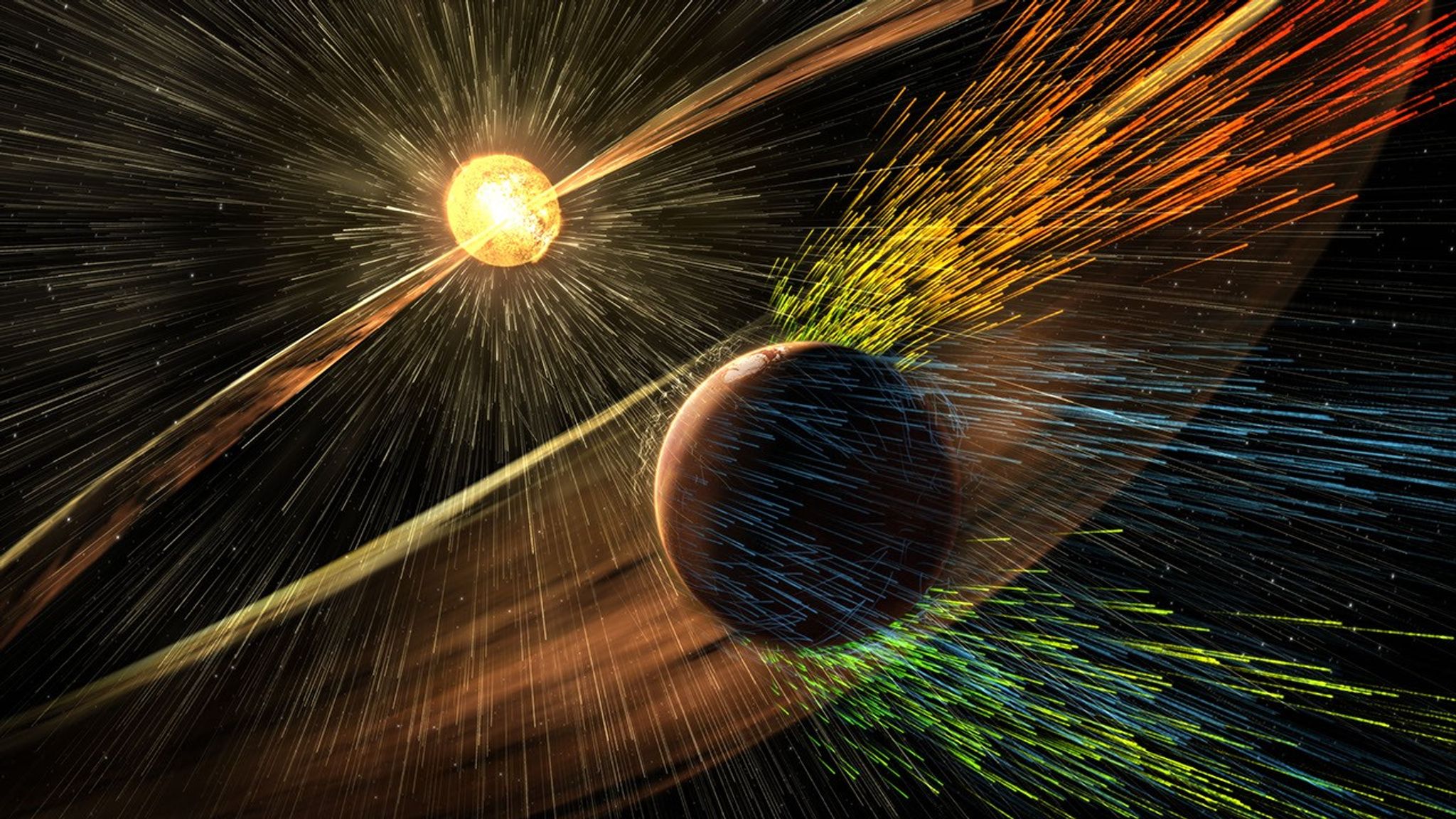
Martian auroras happen when charged particles from solar storms collide with the thin atmosphere of Mars. Unlike Earth, Mars has no strong global magnetic field to deflect much of that incoming energy, so the solar wind gets a more direct conversation with the upper atmosphere.
Imagine Mars hosting a celestial dance party where the DJs are charged particles and the lights are made of excited atmospheric gases. That is the general mood, except the science is doing most of the choreography.
Ions, Electrons, and a Different Kind of Light Show
When solar particles arrive, they transfer energy to ions and electrons in Mars’ upper atmosphere. Those interactions excite gases such as carbon dioxide and carbon monoxide, which then release light as they return to lower-energy states. The result is an aurora, but one with a distinctly Martian personality.
Because the atmosphere is thinner and the chemistry differs from Earth’s, the display is less about grand terrestrial curtains and more about a scientifically priceless glow that reveals how energy moves through a vulnerable atmosphere.
Why Auroras Matter for Atmosphere Loss
The same solar activity that creates these light shows also helps strip atmospheric particles into space. That link makes auroras more than pretty physics. They are evidence of a much larger story about why Mars lost so much of its earlier atmosphere over time.
Energetic particles can give atmospheric material enough energy to escape, especially in regions where magnetic effects and solar inputs become more dynamic.
What MAVEN Keeps Teaching Us
NASA’s MAVEN mission studies these processes to quantify how Mars has shed its air over billions of years. It is a form of planetary archaeology: by observing auroras, ions, and escape rates, scientists can reconstruct how the red planet became thinner, colder, and less able to hang onto its atmospheric cloak.
So the next time you see a diagram of a Martian aurora, remember that behind the shimmer is a lesson in planetary change, magnetic vulnerability, and the long physics of loss.
SourceLink via NASA
Copyright Notice: The image and referenced source content remain the property of their respective creators and rights holders. They are used here solely for commentary, discussion, and informational purposes. Please visit the original source links for attribution and additional information.
© 2026 ways4eu.wordpress.com – H.J. Sablotny. All rights reserved. The text content of this article is the intellectual property of H.J. Sablotny and may not be reproduced, distributed, or republished without permission. Images remain the property of their respective copyright holders and are used for illustrative and commentary purposes only.