Ways4eu WordPress.com Blog
SPA View of ways4eu.wordpress.com
If Not the Most Grand, Then at Least the Most Photogenic: M74, the Cosmos’ Prairie Sunset
By Kinda Cool
on Wed Sep 02 2026
If Not the Most Grand, Then at Least the Most Photogenic: M74, the Cosmos’ Prairie Sunset
Title: If Not the Most Grand, Then at Least the Most Photogenic: M74, the Cosmos’ Prairie Sunset
Quick Links:M74 galaxy | Pisces constellation | Sc spiral galaxy | Hubble Space Telescope | star formation in spiral galaxies
A Spiral That Knows Its Angles
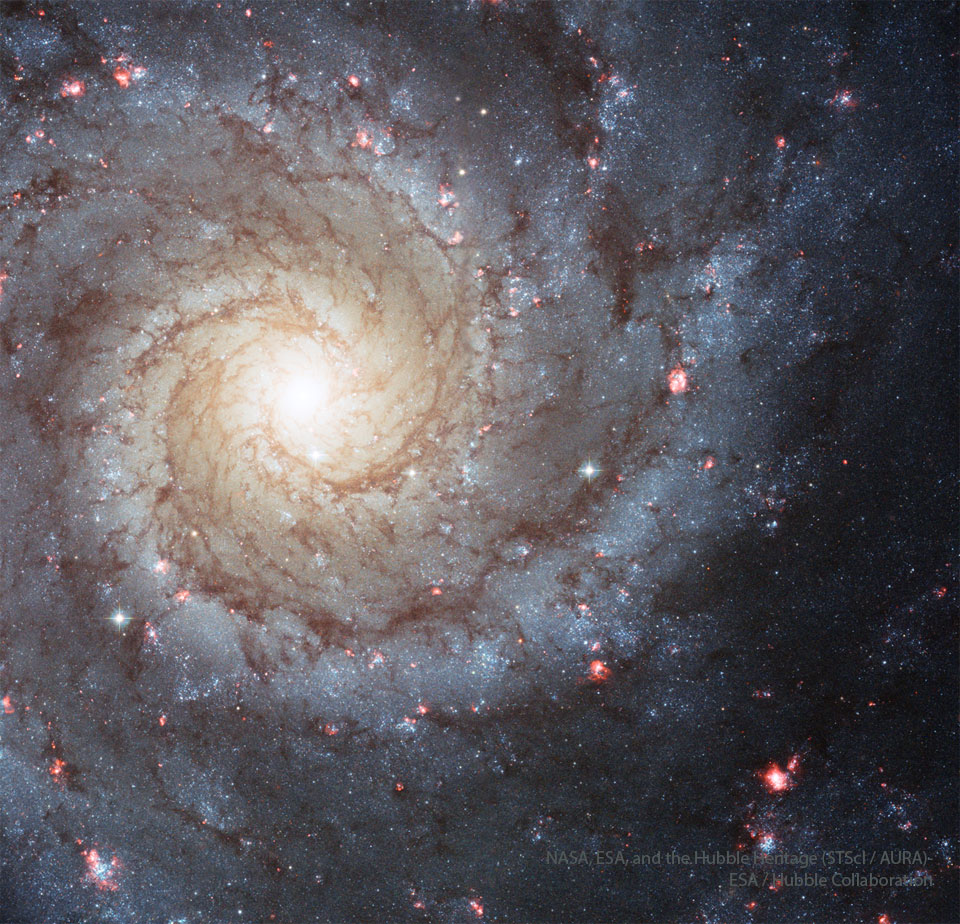
If there’s an argument to be made about the universe’s most handsome spiral, M74 might not win by unanimous vote, but it owns the runner-up’s sash with confident aplomb. This Island Universe, home to about 100 billion stars and a cosmically generous 32 million light-years away in the constellation Pisces, offers a face-on portrait so pristine you’d swear the galaxy came with its own Instagram filter.
M74 earns its badge as an Sc galaxy, a classification that signals grand, sweeping arms and a layout that looks as if someone laid astrophotography on a lullaby. The grand design is visible in exquisite detail: spiral arms that twist and glow, traced by clusters of young, hot blue stars that pop like sapphires against the darker lanes of cosmic dust. Those dust lanes aren’t just scenery; they’re the roadmaps of stellar nurseries, where gas and dust collapse into radiant new generations of stars. It’s as if the galaxy stitched a lacework of light and shadow across its disk, a tapestry that invites you to trace every curve with your eyes.
How the Image Was Built
What makes M74 especially compelling is how the image came to be. This is a composite crafted from archival imagery, an old soul with a new haircut, assembled with the precision of a time-lapse photograph that has aged gracefully. The sharpness you see is a product of careful stacking, calibration, and the kind of patience that only a telescope’s long memory can inspire. The result is not just a pretty picture; it’s a high-definition postcard of cosmic artistry, captured by the Hubble Space Telescope and then refined into a single, stunning view.
If you step closer to the face of M74, you’ll notice the galaxy spans roughly 30,000 light-years across, an appreciable slice of the universe’s canvas. The image doesn’t hide the science; it foregrounds it. Emission from hydrogen atoms glows with a warm red intensity, cutting through the blue of hot, newborn star clusters. Those red beacons highlight the galaxy’s prolific star-forming regions, where the next generation of stellar bodies is born in the glow of ionized gas. It’s a reminder that beauty and birth are forever linked in the cosmos: you don’t get one without the other.
Why the View Feels Cinematic
There’s something almost cinematic about M74’s tilt-free face-on presentation. We’re looking at the galaxy as if it were a lighthouse beaming our way, a steady reminder that we’re observing from a comfortable distance, the kind of distance that affords not just awe, but comprehension. The symmetry and structure speak to the elegance of spiral dynamics, where density waves organize stars and gas into those sweeping arms we’re marveling at from our distant vantage point.
So, the next time you’re scrolling through a gallery of space images and wondering what grand really means, consider M74. It isn’t merely grand in scale; it’s grand in the way light travels, ages, and colludes with matter to create something that feels almost tactile to the human eye. It’s a galaxy that wears its arms like couture, its clusters like glitter, and its dust lanes like delicate embroidery. If you must crown the photogenic, let M74 be a very serious contender, a reminder that the universe, when it chooses, can orchestrate beauty with the disciplined precision of a master artist and the wild certainty of the night sky.
More info:Image via NASA
© 2026 ways4eu.wordpress.com H.J.Sablotny — All rights reserved. The text content of this post is the intellectual property of H.J.Sablotny. Images are subject to their respective copyright holders and are used for illustration purposes only.