Ways4eu WordPress.com Blog
SPA View of ways4eu.wordpress.com
When the Sun Takes a Breath: What If Today’s Eclipse Was the First We Saw?
By Kinda Cool
on Fri Sep 04 2026
When the Sun Takes a Breath: What If Today’s Eclipse Was the First We Saw?
Title: When the Sun Takes a Breath: What If Today’s Eclipse Was the First We Saw?
Quick Links:August 12, 2026 solar eclipse | annular eclipse | ekleipsis | Dine eclipse traditions | Batammariba eclipse beliefs
The Shock of a Ring in the Sky
Pretend you’ve never heard of a solar eclipse. The Sun’s behavior has been predictably boring your whole life, a reliable old lighthouse guiding you home from every sunset. Then, in a single, two-hour slice of August 12, 2026, the sky does something so audacious it almost sounds like a cosmic prank: the Sun vanishes, leaving behind a bright, empty ring, a glowing ring of nothingness where light should be.
If you’re along for the ride without context, what would you think happened? First, you might blink, because blinking is the body’s reflex to strange mathematics. The world used to make sense in neat, apelike habits, sunrise at dawn, sunset at dusk, and now a ring of light that refuses to be called sunlight. Perhaps you’d suspect a cosmic software glitch, an error in the sky’s operating system, or a theatrical star showing off with the most expensive props in the universe: darkness, then a ring, then darkness again.
Scale, Wonder, and the Stories We Reach For
If you lean into the moment just a little longer, you’ll notice two things that stubbornly persist no matter what you believe about the event: scale and wonder. The shadow is big. The crowd is bigger. People pull out their phones not to capture a moment of private awe but to test the horizon with the old reflex of measurement, how long does this last, how fast does the world return to its usual brightness? The two hours stretch out like a suspenseful novel you didn’t know you were reading, with the Sun as the elusive antagonist, the Moon as the cunning co-conspirator, and humanity as the chorus of astonished spectators.
Humans have interpreted eclipses in countless ways throughout history, embedding beliefs about connection, rebirth, or danger into culture. The word Eclipse itself travels through etymology like a rumor in a crowded room: from the Greek ekleipsis, meaning abandonment. It’s a poetic way to describe what happens when light slips away and leaves you with the feeling that something, or someone, has stepped out and left the stage.
In ancient Greece, that moment was read as the gods’ anger or as the Sun abandoning humanity to divine whim. The sky darkens, the day trembles, and the people infer a moral drama far larger than a mere astronomical event. It’s not just science momentarily stepping aside; it’s myth arriving fashionably early to the party, reminding everyone that the cosmos sometimes behaves as if it’s auditioning for a tragedy rather than a straightforward science report.
Renewal, Balance, and Community Under Shadow
Turn the page to a more temperate chorus of interpretations. The Dine people view this celestial alignment as a time of renewal. They treat the eclipse as a moment to pause, to recalibrate, and to respect the Sun’s power by stepping back from the day’s glare. The tradition, staying inside until the Sun and Moon separate, isn’t fear so much as a ritual of balance, a way to honor both light and shadow without turning a single moment into superstition.
Across West Africa, the Batammariba people of Benin and Togo imagine the eclipse as a contest of celestial forces. The belief that the Sun and Moon fight during an eclipse becomes a social instruction: promote peace among people, nurture harmony, and resolve conflicts before the tokens of day and night resume their dance. In these stories, the eclipse isn’t just an event; it’s a reminder that cosmic drama has practical echoes in community life.
And here we arrive at the larger point: eclipses are not merely demonstrations of celestial mechanics; they are mirrors for our relationship with knowledge, fear, and wonder. They invite us to consider how we translate awe into action.
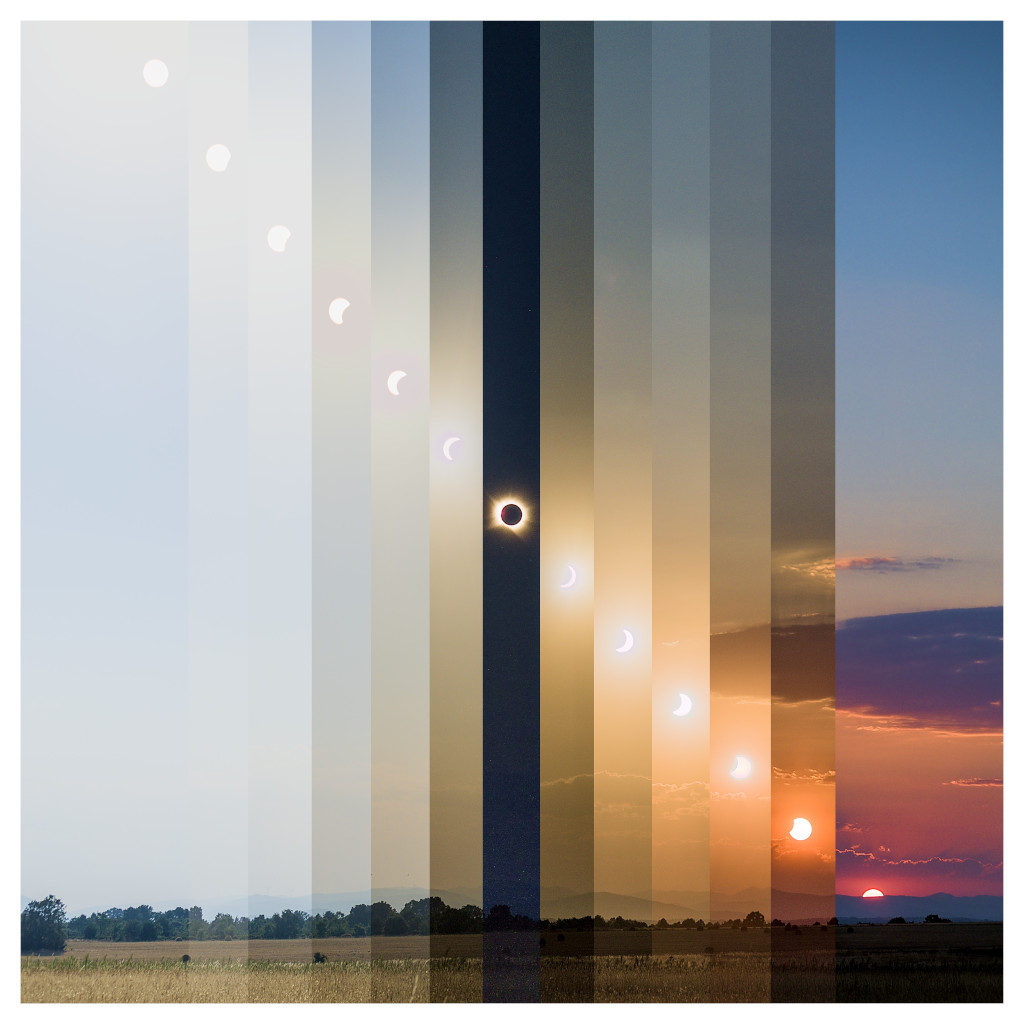
The spliced image of the August 12, 2026 eclipse, two hours compressed into the arc of a single moment, becomes a canvas for a particular kind of human storytelling. It tests our ability to hold paradox: that darkness can illuminate as much as light, that absence can reveal rather than erase.
As you stand beneath the pale, bright ring, the Sun’s quiet apology for momentary disappearance, you may find yourself thinking about abandonment and renewal in the same breath. Eclipses remind us that astronomy and society are inseparable neighbors. The heavens don’t simply lend us data; they lend us stories, too.
So, if today you woke up to the Sun’s disappearance and the Earth’s ring of glow, you wouldn’t merely have witnessed an astronomical incident. You would have attended a cultural ceremony written in the sky, a reminder that the universe has always spoken in symbols, and our job is to listen, translate, and respond with a little wisdom, a touch of humor, and a shared sense of awe.
More info:Image via NASA
© 2026 ways4eu.wordpress.com H.J.Sablotny — All rights reserved. The text content of this post is the intellectual property of H.J.Sablotny. Images are subject to their respective copyright holders and are used for illustration purposes only.