Ways4eu WordPress.com Blog
SPA View of ways4eu.wordpress.com
The Eclipse and the Stork: When Day Becomes Night and Night Becomes Day
By Kinda Cool
on Mon Sep 07 2026
Quick Links
- a Nest Beneath a Changing Sun
- when Animals Pause
- the Brief Theater of Totality
- what the Stork Helps Us Notice
A Nest Beneath a Changing Sun
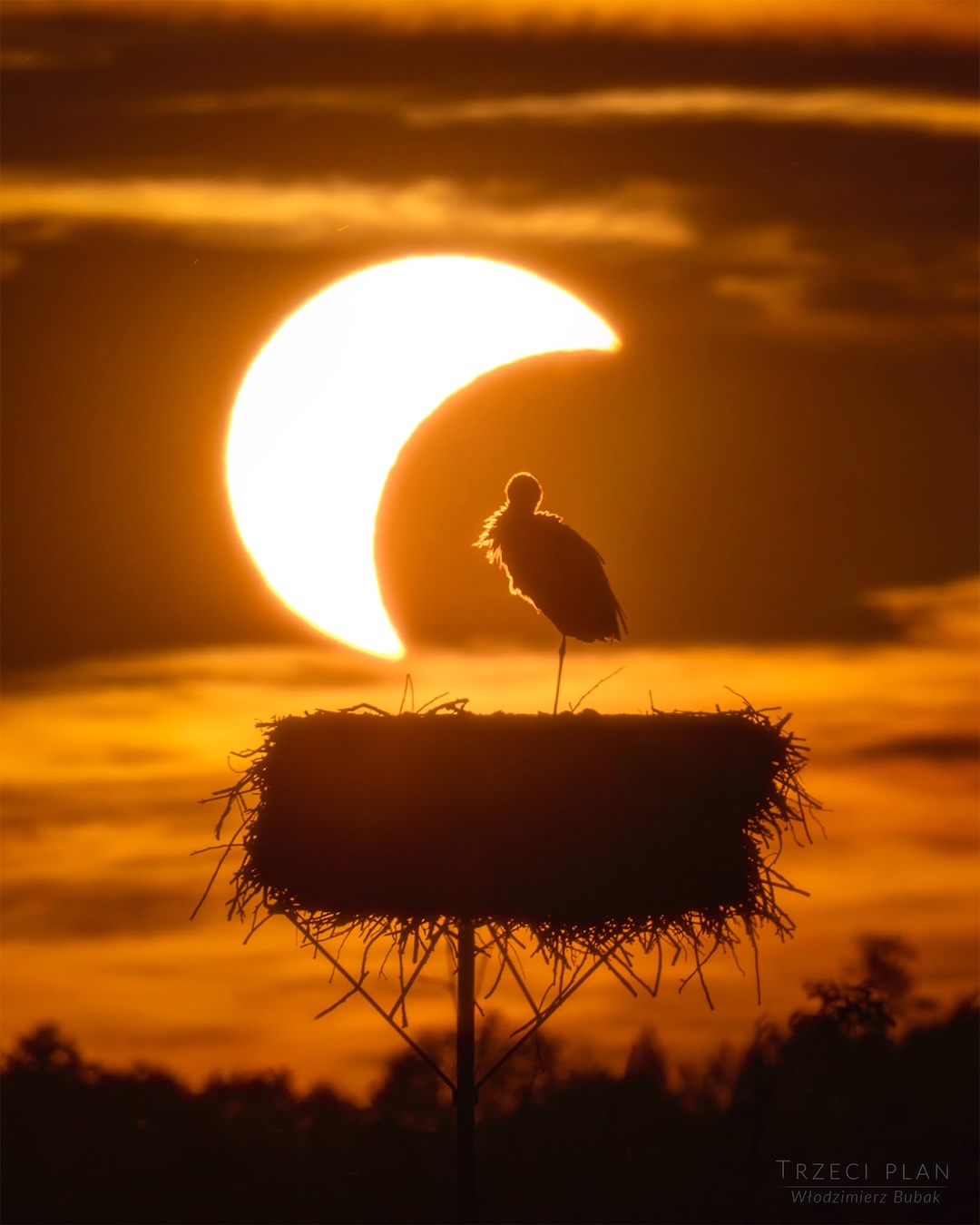
If you’ve ever stood under a sky that suddenly forgets to be day, you know that total solar eclipses aren’t just astronomical show-and-tell; they’re nature’s unexpected social experiment. The featured image—a stork roosting serenely on her Poland nest as a partial eclipse bleeds toward totality—reminds us that the cosmos has a humane sense of drama. Quiet, near-natural moments like these invite us to notice what wildlife does when the Sun goes on a brief vacation.
How do animals react to a total solar eclipse? The short answer: they pause. The longer answer: they pause in ways that feel both strange and familiar, like a familiar chorus suddenly switching to a minor key.
When Animals Pause
If you’re lucky enough to witness a total eclipse somewhere hushed and green, you might catch a tapestry of unusual daytime animal behaviors unfold before your eyes. For a few minutes, the world tilts toward a twilight that doesn’t belong to any time zone. Fireflies flicker as if the evening is keeping its own secrets, and you may hear crickets and frogs cut through the light’s abrupt hush—an odd, nocturnal choir in the middle of the day.
When the Sun begins its slow return, daylight peels back from the horizon like a curtain pull after a midnight show. Songbirds, animated by the revival of light, greet the new “morning” with their dawn songs—a chorus that feels almost aspirational after the temporary dusk. The crickets and frogs also reawaken, their nighttime acoustics fading back into silence as the true day resumes its ordinary tempo.
The Brief Theater of Totality
In the darkness, most birds quiet down. The sky’s sudden switch from bright to blank makes winged creatures stagger between instinct and curiosity. Think of it as a natural power-down: the birds interpret that sudden dimness as a cue to rest, to conserve energy, or to migrate their internal clock from noon to night. The mood shifts from busy to bivouac in a heartbeat.
The lesson of the eclipse, as observed in animals and people alike, is that life carries on—just altered for a moment. The Sun and Moon perform their brief celestial ballet, and Earth’s creatures react in ways that remind us of our own place in the natural order: a brief pause, a redirected rhythm, then a quick return to the familiar tempo we call life.
What the Stork Helps Us Notice
Ducks and other waterfowl bring their own charming routines to the eclipse stage. As light fades, many waterfowl begin to settle in for a pause—often described as preparing to sleep on one leg, with heads turned around and beaks tucked into their back feathers. It’s a neat image, even if the mechanics aren’t quite as poetic as the pose suggests. They don’t truly sleep with a beak tucked under one wing, but their tucked-in posture creates the impression of a creature that’s settled, secure, and listening for the next cue from the sky.
If you’ve ever stood beneath a sky in eclipse, you might have felt both small and connected at once. The moment is brief, but its echoes linger—an invitation to notice the ordinary transformed into something almost magical. Animals don’t just endure the event; they participate in the drama of a sky that forgets its usual routine for a few minutes. And then, as if nothing had happened, life resumes, with the occasional new memory to share about the day the Sun and Moon took a pause to watch the world orbit on.
Image via NASA https://ift.tt/74PVICO
Copyright Notice: The image and referenced source content remain the property of their respective creators and rights holders. They are used here solely for commentary, discussion, and informational purposes. Please visit the original source links for attribution and additional information.
© 2026 ways4eu.wordpress.com – H.J. Sablotny. All rights reserved. The text content of this article is the intellectual property of H.J. Sablotny and may not be reproduced, distributed, or republished without permission. Images remain the property of their respective copyright holders and are used for illustrative and commentary purposes only.