Ways4eu WordPress.com Blog
SPA View of ways4eu.wordpress.com
Riding the Shadow: A 50,000-Foot Front-Row Seat to a New Moon’s Eclipse
By Kinda Cool
on Wed Sep 09 2026
Quick Links
- a Jet Chases the Moon’s Shadow
- above Clouds, Dust, and Water Vapor
- why NASA Flew Into Totality
- what the Eclipse Reveals from 50,000 Feet
A Jet Chases the Moon’s Shadow
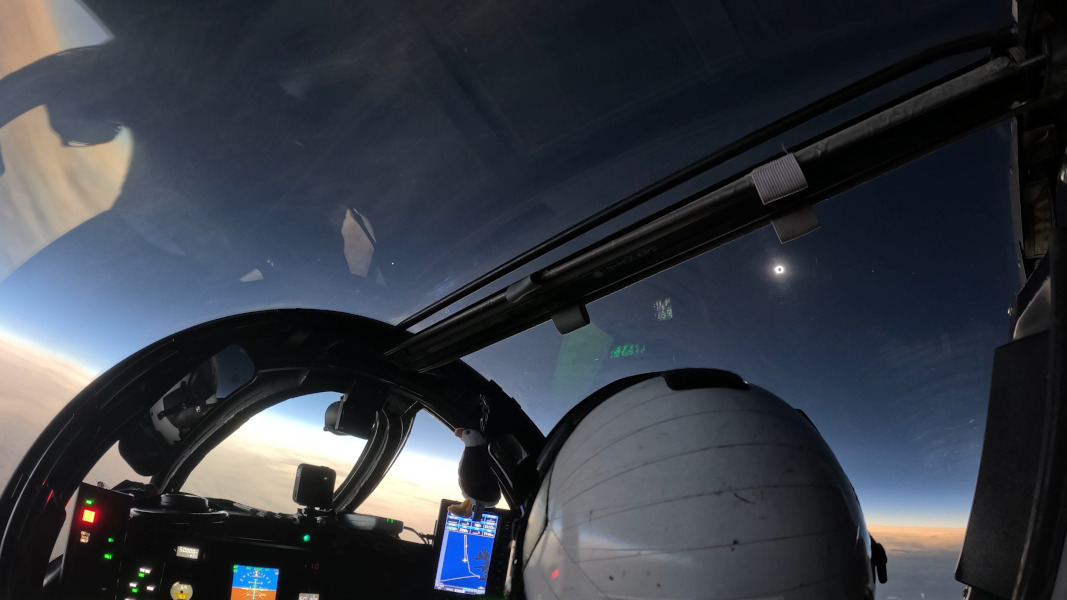
Chasing the shadow of a New Moon, NASA’s WB-57F high-altitude research aircraft took to the skies off the coast of Iceland on August 12 to observe a total solar eclipse. It’s the kind of line-item spectacle that sounds almost mythic until you realize there’s a jet, a crew, and a dozen cameras engineering the moment into something you can replay in slow motion and still barely believe.
At 50,000 feet, the aircraft wasn’t just flying; it was teleported into the precise path of totality, a carefully choreographed waltz across the sky designed to maximize the precious seconds (and minutes) the Moon’s shadow would blanket the Earth. The goal was simple in philosophy, audacious in execution: ride the edge of darkness long enough to peel back the veil of the Sun’s outer atmosphere, a region so radiant and delicate that it can vanish in a heartbeat if you blink. Or, in this case, if you’re not perfectly aligned with the Moon’s shadow.
Above Clouds, Dust, and Water Vapor
Onboard, a suite of high-resolution cameras captured the eclipse from a vantage point that mattered: above the clouds, above the dust, above the atmospheric water vapor that can choke a telescope’s breath and blur a spectrum. Observations from ground level are always a little hazy—signal fighting through weather, air, and a crowd of listeners who want to tell you what they think they saw. Up here, the data has a cleaner silhouette, a sharper edge, a more intimate dialogue with the Sun’s corona just as totality begins.
Yet the horizon—far below—remains stubbornly bright, a telltale line that the Earth’s edge continues to burn with daylight’s distant memory. Beyond the Moon’s reach, the landscape remains, in its own way, a counterpoint to the eclipse: a reminder that the universe isn’t canceling anything so much as staging a temporary intermission. The shadow cuts through, then recedes, and the day resumes its ordinary cadence, while the footage lingers like a postcard from an extraordinary moment.
Why NASA Flew Into Totality
The inflight video from the cockpit offers a move you don’t see in most eclipse reels: a moment when the corona, that thin, ethereal crown of solar plasma, makes its debut at the onset of totality. The sky itself darkens where the Moon’s shadow falls, a hush of blue-black quiet that could persuade a clock to slow down. It’s as if the universe hit a dimmer switch, and the beam from the edge of the Sun finally reached its long-awaited spotlight.
What do you do with an experience like this? You collect it in high definition and higher curiosity. You map the vistas where darkness and light collide, you catalog the celestial choreography, and you tell the story with the kind of detail that makes the ordinary sky feel almost conspiratorial in its familiarity. The WB-57F’s mission wasn’t just to chase a shadow; it was to record a whisper from the edge of the Sun, to translate a cosmic event into data that researchers, students, and dreamers can study and savor.
What the Eclipse Reveals from 50,000 Feet
In the frame, Venus sits to the left of center, a bright, solitary beacon that doesn’t care for the drama but enjoys its cameo. To the right, Jupiter and Mercury hover near the eclipsed Sun, their own planetary cameos adding a celestial chorus to the broadcast. The composition is a reminder that even as the Moon’s shadow steals the day, a wider solar system keeps its own orbit of brightness and wonder circling just beyond the frame.
If you’re ever tempted to think solar eclipses are a once-in-a-lifetime stunt, remember the science—and the wings—that make such moments accessible. The sky isn’t a static ceiling; it’s a stage, and on August 12, off the coast of Iceland, it hosted a well-calibrated performance where human ingenuity and celestial mechanics met for a few precious minutes of shadow and light. The cameras did their job. The crew did theirs. And the rest of us—watchers at home and in the cockpit of imagination—get to marvel at the view from an altitude that makes the ordinary seem eventful, if only for a moment, when the Moon does what the Moon does best: remind us how large our universe is, and how lucky we are to glimpse a corner of it through a very particular window in the sky.
Image via NASA https://ift.tt/bFvca7P
Copyright Notice: The image and referenced source content remain the property of their respective creators and rights holders. They are used here solely for commentary, discussion, and informational purposes. Please visit the original source links for attribution and additional information.
© 2026 ways4eu.wordpress.com – H.J. Sablotny. All rights reserved. The text content of this article is the intellectual property of H.J. Sablotny and may not be reproduced, distributed, or republished without permission. Images remain the property of their respective copyright holders and are used for illustrative and commentary purposes only.