Ways4eu WordPress.com Blog
SPA View of ways4eu.wordpress.com
COSI Telescope Comes Together: When Detector Assembly Becomes a Slow-Motion Star of the Show
By Kinda Cool
on Sun Sep 20 2026
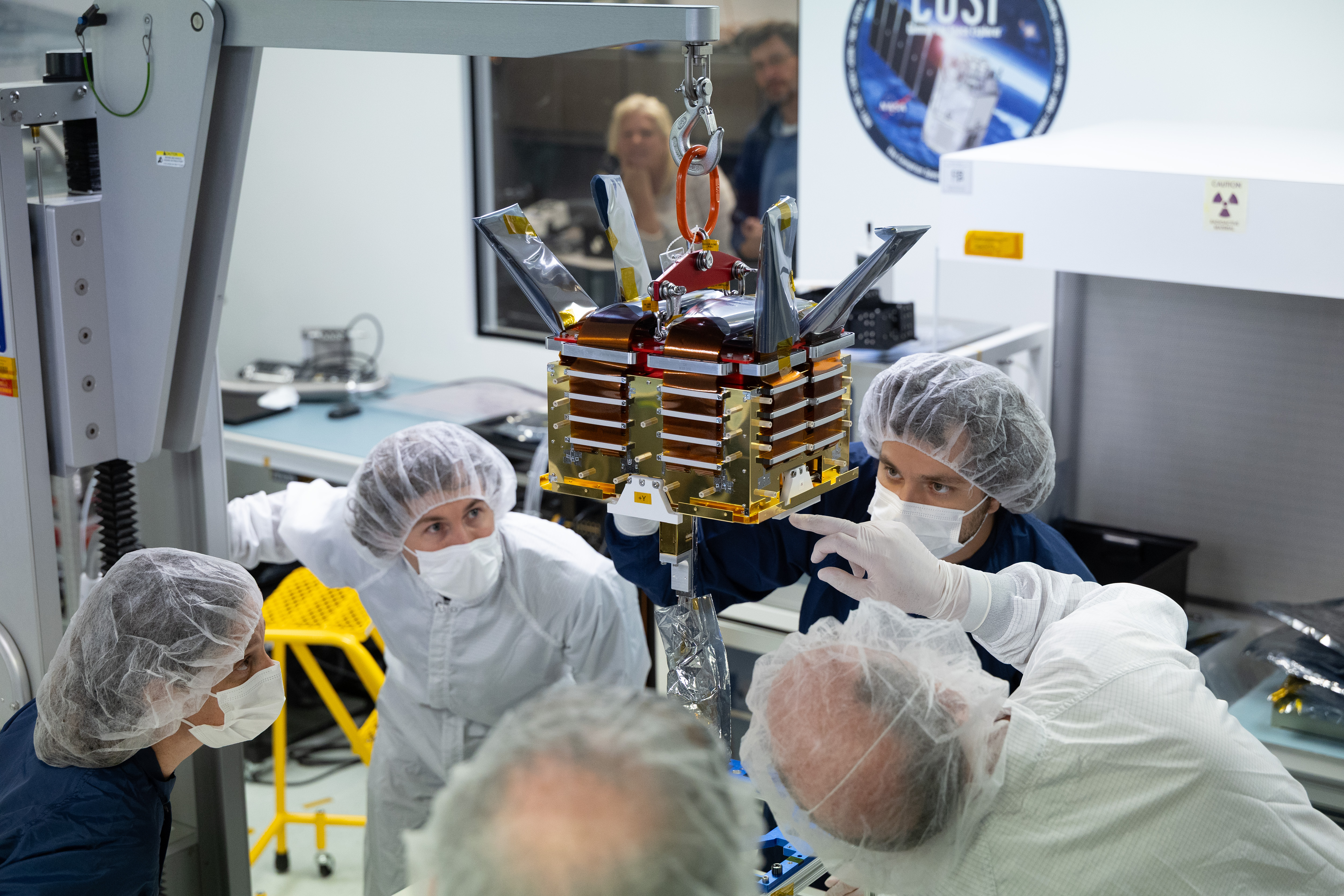
A Scene Comes Into Focus
In a scene that could double as a rehearsal for a very nerdy heist movie, UC Berkeley engineers and managers gathered around a gleaming circle of precision hardware as the COSI (Compton Spectrometer and Imager) detector assembly began its deliberate ascent from the table to the awaiting universe. It was July 8, 2026, and somehow a table, a handful of engineers, and a detector that might know more about gamma rays than I know about my coffee maker had all the suspense of a summer blockbuster—only with more silicon, fewer explosions, and significantly less risk of popcorn overheating.
The moment was less a dramatic launch and more a meticulous duet between human hands and titanium. The assembly drifted upward with the grace of a very well-behaved drone, if drones were made of finely tuned sensors, meticulous screws, and the kind of quiet confidence you only hear in a lab when someone whispers, “Just a touch more there.” The team’s eyes followed every inch as if the fate of the cosmos depended on each micro-adjustment—a sentiment that, in truth, it kind of does, but in a very NASA-adjacent, “we better not jinx it” way.
If you’ve ever watched engineers at work, you know they’re equal parts problem solvers and ritualists. There’s the steady clink of tools, the soft whir of calibration devices, and the unspoken agreement that measurements must be precise down to the atomic level or, at minimum, to the exact micrometer needed to avoid the kind of cosmic-ray mischief that would ruin a napkin-drawn hypothesis. This moment was the tangible proof that patience is not only a virtue but a prerequisite for peering into the high-energy heart of the universe.
The Science Behind the View
The COSI detector, in all its gleaming, purpose-built glory, is more than a piece of equipment. It’s a carefully engineered gateway to understanding gamma rays, the universe’s most dramatic messengers. And while the spectacle of a slowly rising detector might look like a ceremonial unboxing, it’s really a choreography—each component aligning with an almost musical precision that would make a symphony conductor nod in approval. If the cosmos had a hall of fame, COSI would be working its backstage magic, ensuring every photon gets the right spotlight when the time comes to observe the grand dance of matter and energy far beyond our blue planet.
Around the table, a cast of engineers and managers traded smiles that said, without words, “We’ve got this.” The humor in the room wasn’t loud, but it was there—the kind of quiet chuckle that travels through a lab when someone cracks a joke about “detector drama” or notes that the alignment vendor’s third coffee was apparently the charm. It’s a camaraderie built on the shared thrill of turning abstract concepts into tangible, functioning devices that will soon point their telescope-bearing gaze toward the stars.
Why the Image Feels Alive
As the assembly crept higher, the atmosphere carried that delicate mix of anticipation and practical caution. Every move was a reminder that astronomy isn’t just about grand ideas; it’s about meticulous, methodical work that ensures the data returned will be clean, interpretable, and capable of withstanding the rigorous scrutiny of peer review. The team’s hands moved with practiced ease, communicating through gestures and micro-adjustments, like dancers in a well-rehearsed routine—one misstep and the whole ensemble might miss a calibration cue, and no one wants that in a project with cosmic ambitions.
Soon enough, the detector found its place in the assembly with a settled, almost contented sigh of metal and magnetism. The moment wasn’t a flash of fireworks; it was a slow, deliberate ascent that felt almost ceremonial. And as the last fastening clicked into place, there was a shared sense of quiet triumph—a small, respectful cheer for teamwork, engineering prowess, and the stubborn beauty of getting something incredibly complex to do exactly what it’s supposed to do.
When you step back and think about it, this is what progress looks like: a table, a handful of experts, and a dream to listen to the universe in a language it speaks fluently—gamma rays. The COSI team isn’t merely assembling hardware; they’re tuning a chorus of detectors to capture the whispers of distant phenomena, to translate those whispers into data we can analyze, interpret, and, ultimately, understand. It’s the human side of science—the steady hands, the careful planning, the occasional joke to ease the tension—and a reminder that together, we’re building tools that help humanity listen more closely to the cosmos.
What the Sky Keeps Teaching
So here’s to the patient ascent, to the dedicated minds at UC Berkeley, and to the moment when a detector sits proudly in its cradle, ready to gaze upward. The COSI telescope is coming together, and it’s doing so with humor, precision, and a shared sense of purpose that feels distinctly Berkeley in spirit: curious, collaborative, and stubbornly optimistic about what the universe still has to say.
Image via NASA https://ift.tt/JHkXpOe
Copyright Notice: The image and referenced content remain the property of their respective creators and rights holders. They are used here solely for commentary, discussion, and informational purposes. Please visit the original source links for attribution and additional information.
© 2026 ways4eu.wordpress.com – H.J. Sablotny. All rights reserved. The text content of this article is the intellectual property of H.J. Sablotny and may not be reproduced, distributed, or republished without permission. Images remain the property of their respective copyright holders and are used for illustrative and commentary purposes only.