Ways4eu WordPress.com Blog
SPA View of ways4eu.wordpress.com
The False Dawn, Bright Nights: A Zodiacal Waltz from Hanle
By Kinda Cool
on Sun Sep 20 2026
Quick Links
- Zodiacal Light over Hanle
- Jupiter, Mars, and M44
- Interplanetary Dust and Juno
- Why the False Dawn Matters
Zodiacal Light over Hanle
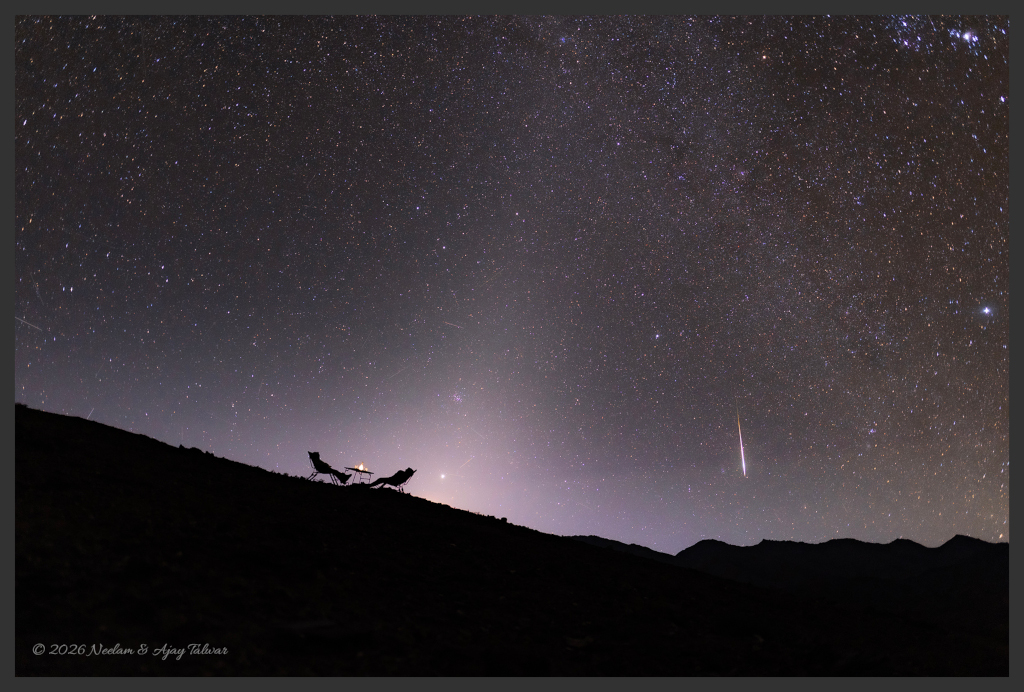
Also known as the false dawn, a luminous band of zodiacal light slips into view, stitching the night with a whisper of dawn’s early glow. This isn’t a sunrise rehearsal—it’s a nightscape grand enough to make even the constellations pause and say, “Well played.” Captured during September’s star party, this serene vista unfurls from the remote Hanle Dark Sky Reserve in Ladakh, India, where planet Earth wears its most forgiving skin for stargazers and shutter-clicking enthusiasts alike.
At roughly 4,500 meters above sea level, Hanle isn’t just a high-altitude postcard. It’s a haven where dry air, low humidity, and a stubborn purity of darkness invite the heavens to put their best faces forward. The sky here is less a ceiling and more an invitation—one that begs you to linger, lens in hand, while meteors streak across the frame like impatient cameo appearances.
Jupiter, Mars, and M44
Near the eastern horizon, the bright planet Jupiter commands a cameo in the faint zodiacal glow, a regal companion to the glow that Massively Dances with the night’s edge. The scene invites the curious to follow the zodiacal band toward the zenith, where a household name in star lore waits: the open star cluster M44. It glows with a gentle, collective shimmer, as if a cluster of friends had chosen to gather in the same neighborhood for a late-night cosmic chat.
Toward the center of the frame, another guest makes its entrance—a yellowish tinged planet, Mars, adding a splash of ochre to the twilight watercolor. Mars isn’t merely a point of color here; it’s a reminder that the solar system isn’t a static diorama but a moving gallery, where dust, light, and planetary personalities collide in slow, celestial ballet.
Interplanetary Dust and Juno
And yet the story isn’t only about what we see on the sky’s surface. It’s about a curious whisper from NASA and the Juno spacecraft: interplanetary dust, born of Mars perhaps, backscatters sunlight to conjure this very zodiacal glow in Earth’s night. If that sounds like cosmic mischief, that’s because it is—Mars, in particular, plastering its signature across the night’s broad canvas, turning our night into a kind of dusty light show that we’re lucky enough to witness from a far planet’s point of view.
The Hanle night is a reminder that the universe isn’t just a static gallery of distant points. It’s an active, breathing spectacle where planets, dust, and light conspire to yield something more than the sum of their parts. Zodiacal light—the faint, almost shy glow—takes its seat among the brighter players, a subtle chorus that only becomes audible to those listening with a long exposure and a patient eye.
Why the False Dawn Matters
So here’s to the false dawn that isn’t trying to fool us at all, but rather to remind us that the night holds as much drama as the day. To Jupiter’s steadfast glow, to M44’s crowded chorus, to Mars’s dusty brushstroke near the frame’s heart—and to the dust that still finds a way to light up the heavens when the sun has gone to bed. If you’re chasing a sky full of personality, Hanle has a front row seat with your name on it. Image via NASA https://ift.tt/shIZ5Vw
Sources
Copyright Notice: The image and referenced content remain the property of their respective creators and rights holders. They are used here solely for commentary, discussion, and informational purposes. Please visit the original source links for attribution and additional information.
© 2026 ways4eu.wordpress.com – H.J. Sablotny. All rights reserved. The text content of this article is the intellectual property of H.J. Sablotny and may not be reproduced, distributed, or republished without permission. Images remain the property of their respective copyright holders and are used for illustrative and commentary purposes only.