Ways4eu WordPress.com Blog
SPA View of ways4eu.wordpress.com
A Once-in-a-Lifetime Moon Zinger: A 10-20 Meter Visitor Makes a Very Local Splash
By Kinda Cool
on Fri Sep 25 2026
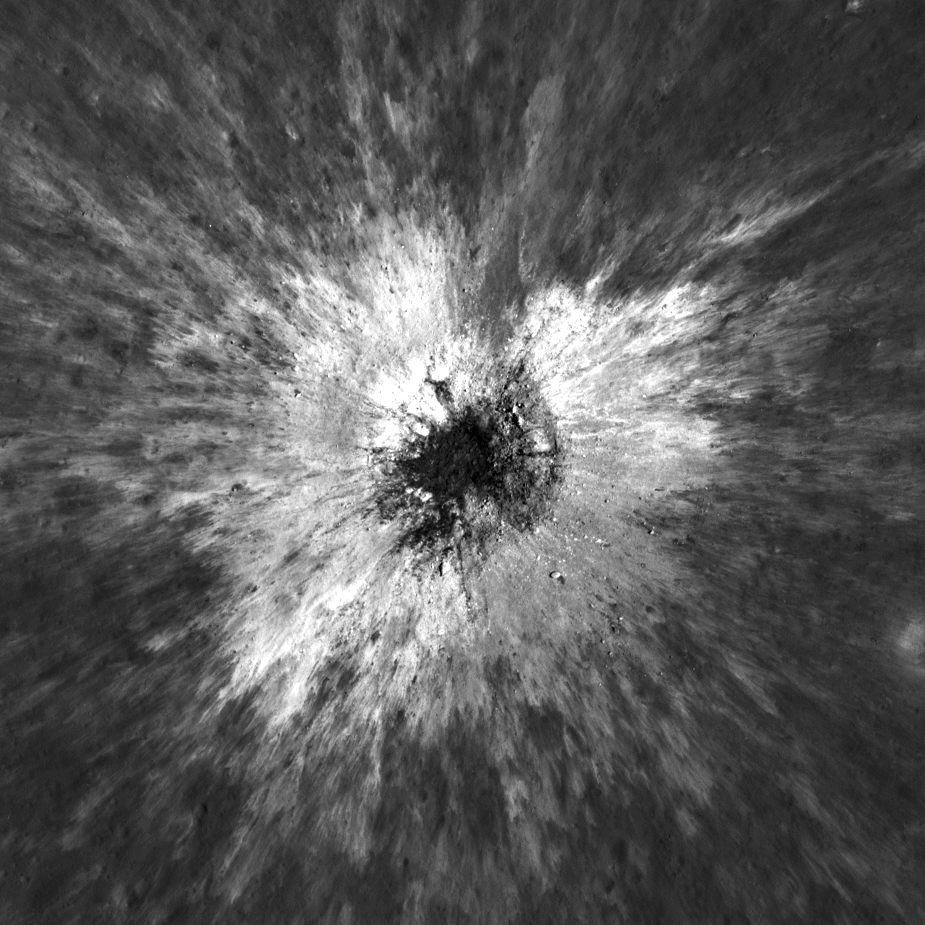
A New Scar on the Moon
A comet or asteroid the size of a humpback whale—yes, 10 to 20 meters (30 to 60 feet) of cosmic splendor—decided to drop in on the Moon sometime between April and May of 2024. No RSVP, no reservation system, just a spectacular crash that left a crater whose footprint is surprisingly large for something that weighed a small office building and then some.
The Lunar Reconnaissance Orbiter (LRO) keeps a monthly eye on the Moon like a sleep-deprived park ranger watching for shooting stars, and it captured today’s images of the lunar surface before and after the event. In a sequence that sounds almost cinematic, the shots reveal both the moment of impact and the quiet aftermath—an instant of chaos followed by a calm, cradled in white dust and lunar silence.
The 2024 Lunar Impact
The crater that now bears the name of McGetchin, a luminary from the Apollo era who studied the Moon with the care of a meteorologist watching a storm from another world, is two soccer fields across. If you’ve never measured in soccer fields, think about a field-size tile puzzle: two football pitches side by side, blown up by a cosmic bowling ball. Craters of this size are the cosmic equivalent of a blue moon—that is, rare enough that you should probably mark your calendar with a star and a hopeful sigh: these beasts show up only about once every 132 years.
Follow-up thermal imaging adds a nice twist to the morning-after story. It reveals a large cold spot that wraps around the warm crater like a chilled halo. On the Moon, warmth is a fickle thing; heat can retreat quickly, leaving behind a telltale signature. But the cold spot around the crater tells a more complicated tale: surface impacts kick up the loose lunar sediment, or regolith, making it less dense and less capable of holding heat. In other words, the impact didn’t just etch a hole in the ground—it reshaped the local heat economy of the Moon’s top layer.
What the Orbiter Images Reveal
What does all this mean for science? A lot, as it turns out. The event implies that even modestly sized interplanetary visitors can alter a much larger swath of terrain than their footprint alone would suggest. The expansion of the affected area beyond the visible crater informs researchers about the dynamics of surface impacts, regolith behavior, and the evolution of the Moon’s outer layers. It’s a reminder that even in the tranquil, airless highlands and seas of tranquility, dramatic processes are at work—just with a slower tempo and a lot more dust.
And there’s a little human poetry in it, too. The Moon’s stillness contrasts with the violent moment of impact, a poetic wink that we are not alone in our little corner of the solar system. It also reminds us with a wink and a sigh to be grateful for Earth’s atmosphere—the protective, life-sustaining blanket that makes our world feel so much closer and so much kinder than the vacuum outside. The atmosphere is not just a shield; it’s a reminder that sometimes the most remarkable events happen where life can observe, learn, and tell the tale with a touch of humor.
Why Small Visitors Matter
So we watch, we wonder, and we write. A humpback-whale-sized visitor carved a new page in lunar history, and the Moon—our patient, cratered companion—continues to teach us about impact, heat, and the quiet after the storm. Here’s to science that notices the details, to images that tell a story, and to the cosmic symphony that reminds us to breathe a little easier, here on Earth, where the air is ours to appreciate.
Image via NASAhttps://ift.tt/HG4Rejc
Sources
Copyright Notice: The image and referenced content remain the property of their respective creators and rights holders. They are used here solely for commentary, discussion, and informational purposes. Please visit the original source links for attribution and additional information.
© 2026 ways4eu.wordpress.com – H.J. Sablotny. All rights reserved. The text content of this article is the intellectual property of H.J. Sablotny and may not be reproduced, distributed, or republished without permission. Images remain the property of their respective copyright holders and are used for illustrative and commentary purposes only.