Ways4eu WordPress.com Blog
SPA View of ways4eu.wordpress.com
Moon-Walking with a GPS-Bug: Practicing Safe Landings on the Moon and Beyond
By Kinda Cool
on Fri Sep 25 2026
What Happened in Space
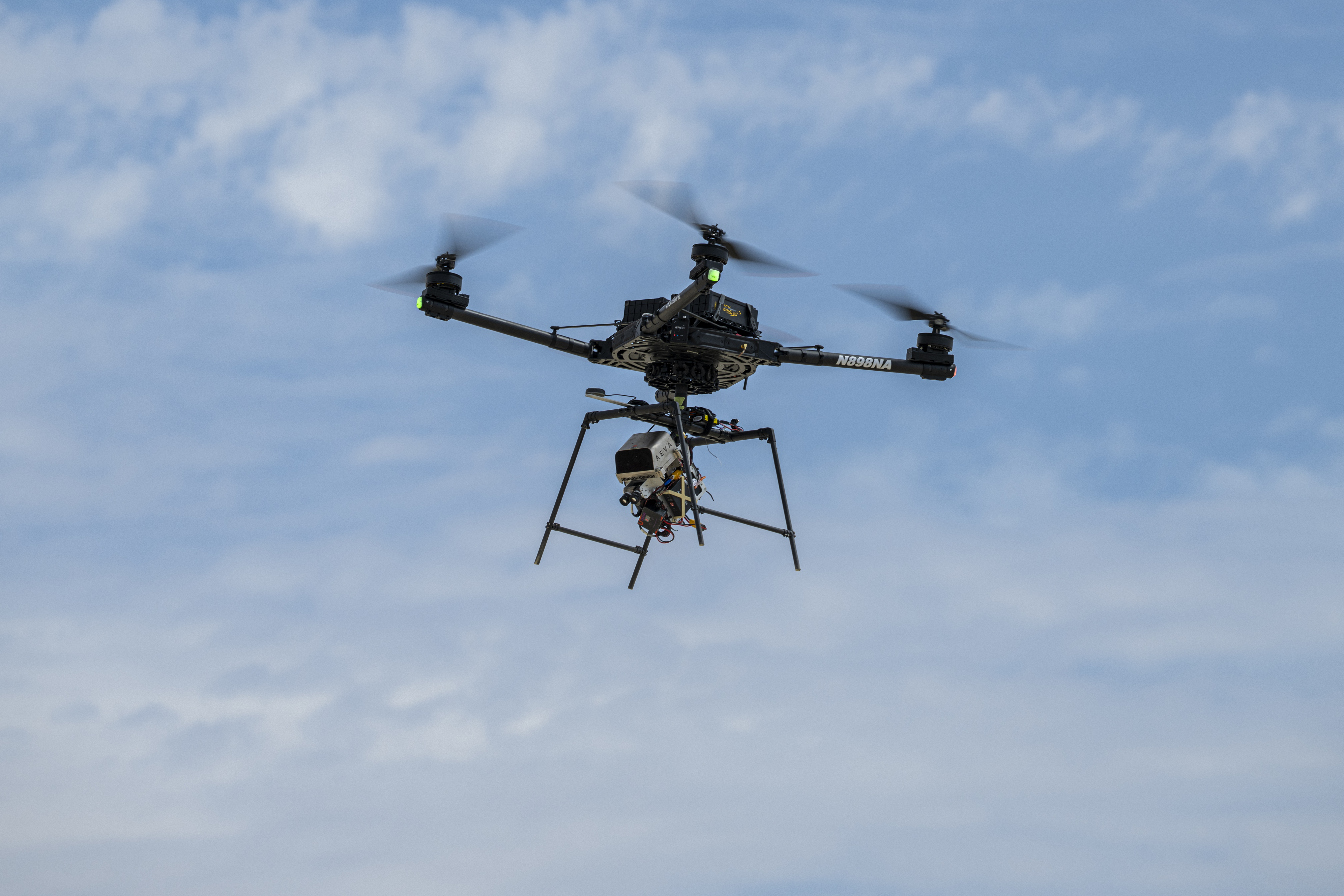
There’s a buzz in the desert air as an Alta-X drone does its best space-age impression: a high-tech buzz, a nimble wobble, and a landing in a way that would make a cat land with the elegance of a NASA protocol officer. On Thursday, Aug. 27, 2026, near NASA’s Armstrong Flight Research Center in Edwards, California, an advanced guidance and navigation system—aptly labeled the Safe and Precise Landing – Integrated Capabilities Evolution (SPLICE) experiment—pushed the idea of a perfect touchdown from “we’ll do our best” to “we’ll do this when the sun is just right and the soil has forgiven us for trying.”
If you’re not already picturing a new era of spacey porch pirates, let me translate the scene with a touch more whimsy: imagine a drone wearing a tiny lab coat, humming a tune only buzzards and engineers truly love, and then carefully guiding itself to a landing pad that seems to appear only when the stars—or perhaps the GPS satellites—align. SPLICE is not about dramatic space-age fireworks; it’s about rigorous, repeatable landings in demanding environments. The lessons learned here are the kinds of things you’d want if you ever need to park a vehicle on a moon base without denting the pretending-to-be-an-asteroid habitat.
Practicing for Safe Landings on the Moon and Beyond is the headline that wouldn’t quit. Why practice, you ask? Because a moon landing isn’t like parking a car in a quiet driveway. There’s gravity (less than Earth’s, sure, but still enough to turn a heroic descent into a slapstick moonwalk-in-slow-motion), dust that swirls like a bad selfie filter, and terrain that looks calm until you check the rock density and realize you’ve parked on a snooze button for the drone’s sensors. SPLICE aims to smooth out those rough edges with a suite of integrated capabilities—navigation that talks to guidance that talks to hazard detection, all coordinated in a way that would make a symphony jealous of its precision.
The Science Behind the Scene
Here’s what makes the SPLICE experiment feel like a sci-fi comedy with a very serious safety brief:
- Integrated Guidance and Navigation: Think of it as a chief of staff for the drone’s instincts. It keeps the vehicle on a safe, precise path to touchdown, even when the ground beneath isn’t exactly friendly or flat. This isn’t just line-following; it’s multi-sensor, multi-layer decision-making on the fly.
- Hazard Detection and Avoidance: The system is scanning for rocks, slopes, and those mischievous craters that seem to hide behind every dust puff. It’s a bit like having a co-pilot who has a habit of shouting, “Left! Now right! There’s a dune with a personality trait we didn’t authorize.”
- Real-Time Adaptation: The Moon won’t call ahead for a dinner reservation, so the drone must adapt to changing lighting, dust, and wind conditions in real time. SPLICE stays cool, recalibrates, and continues toward a safe landing.
What the Images Reveal
- Verification and Testing in Terrestrial Environments: Edwards, California, is not the Moon, but it’s a robust proving ground. By simulating lunar-like challenges here on Earth, researchers can iterate quickly, adjust the software, and refine the dance steps for off-world landings.
A couple of quips you might hear around the test site:
– “Is it landing safely, or is it auditioning for a role in a Martian rom-com?” Either way, the answer is yes—with safety as the lead.
– “If the drone can land here with confidence, imagine what it can do on a surface where gravity plays hard to get and the ground keeps secrets behind every shard of regolith.”
But humor aside, the practical impact of SPLICE reaches far beyond pretty landings. Safe and precise landings are foundational for future lunar and planetary missions. They enable rovers and landers to approach with confidence, to deploy scientific instruments without risking collapse or misalignment, and to lay the groundwork for longer excursions on alien terrain. In other words, SPLICE is training wheels for a future where humans, robots, and perhaps a lunar coffee cart can coexist on a dusty, faraway world.
For the space enthusiasts and the space-curious alike, this demonstration is a reminder that innovation often travels in quiet, careful steps rather than loud fireworks. The work happening near Edwards is not about showmanship; it’s about building reliable systems that can operate in conditions where a wrong move isn’t dramatic—it’s expensive, dangerous, and potentially mission-ending.
Why the Observation Matters
As the day ends and the dust settles, the drone—our well-behaved traveler with a pilot’s heart and a sensor’s memory—has added another page to the manual of safe exploration. The Moon is a grand stage, and SPLICE is one of the reliable backstage crews making sure every cue lands exactly where it should.
So here’s to the quiet confidence of a drone gliding toward a small, precise landing, and to the teams who teach it patience, resilience, and a sense of humor about gravity. The road to the Moon and beyond is paved with careful tests, meticulous checks, and the occasional grin at a successful touchdown—proof that practice does, indeed, make safer perfect landings.
Image via NASA https://ift.tt/QsJp3Bh
Copyright Notice: The image and referenced content remain the property of their respective creators and rights holders. They are used here solely for commentary, discussion, and informational purposes. Please visit the original source links for attribution and additional information.
© 2026 ways4eu.wordpress.com – H.J. Sablotny. All rights reserved. The text content of this article is the intellectual property of H.J. Sablotny and may not be reproduced, distributed, or republished without permission. Images remain the property of their respective copyright holders and are used for illustrative and commentary purposes only.