Ways4eu WordPress.com Blog
SPA View of ways4eu.wordpress.com
NASA’s Hubble Telescope Reaches Milestone, Looks for Elusive Supernova
By Kinda Cool
on Fri Sep 25 2026
What Happened in Space
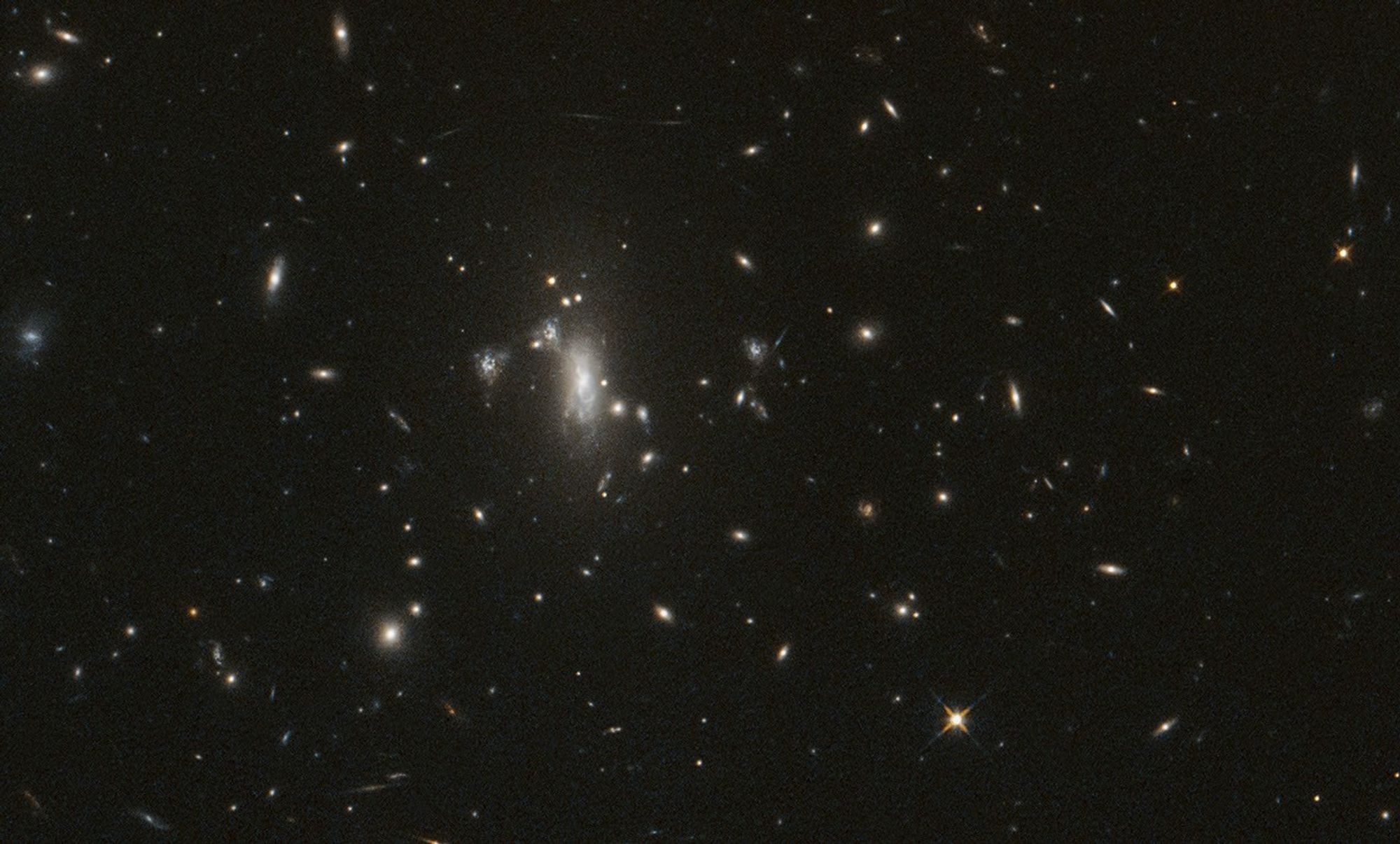
If you’ve ever argued with a stopwatch about the universe’s pace, you’re in good company with NASA’s Hubble Space Telescope. The mighty optical eye in the sky has just nudged humanity closer to answering a question as old as bedtime stories: how fast is the universe expanding? The beat grows louder as Hubble turns its gaze to galaxy cluster MACS J0417, not for a dramatic photo op, but to monitor the possible reappearance of a mysterious supernova named Athena.
Athena isn’t just a fancy name you shout during a college football game. In the cosmos, it’s a supernova that could reappear like a cosmic encore. Reappearance means more data, which means better measurements of the universe’s expansion rate. If Athena pops back into view, astronomers can compare its brightness over time and refine calculations about how quickly space itself is stretching. Spoiler alert: the faster it’s expanding, the more it reshuffles our understanding of dark energy, gravity, and whether we should invest in more space-sized telescopes named after mythological figures.
Hubble’s current mission with MACS J0417 is less about catching the supernova in the act and more about keeping a persistent eye on the stage. Think of it as a long-running reality show in the cosmos, where the stars occasionally deliver a surprise twist. By repeating observations of this galaxy cluster, scientists can spot subtle changes, verify whether Athena is indeed reappearing, and, if so, measure its timing. The process is painstaking—spectral fingerprints, light curves, and a healthy dose of patience—but that’s also what makes astronomy feel like the ultimate cliffhanger.
The Science Behind the Scene
So why all the fuss over one reappearing supernova? Because timing is everything when you’re trying to map the universe’s expansion. A precise timeline helps calibrate cosmic distance scales and cross-checks results from other observatories. It’s the kind of data that quietly humbles our human-scale sense of speed. We think we’re moving quickly in our daily lives, but the cosmos is in a totally different league—think meteor-dentist-speed limits with a dash of speed-of-light spice.
For the tech enthusiasts and star-gazers among us, this milestone isn’t about a single flash of brightness; it’s about the discipline of watching, waiting, and repeating. Hubble’s repeated observations are a testament to a philosophy: patience pays off, especially when the payoff could rewrite the chapters of cosmology. Each image captured, each measurement refined, is a piece of the puzzle that helps scientists translate the universe’s expansion into something tangible—like a cosmic ruler that doesn’t wear out after a few thousand years.
What the Images Reveal
And while we’re geeking out over gigapixels and photometric precision, let’s take a moment to appreciate the team behind the telescope. Engineers, astronomers, and mission planners work in concert to keep Hubble’s optics clean, its instruments calibrated, and its schedule lightsum tight. It’s a collaborative symphony where even the smallest improvement can translate into big leaps in our understanding of everything from the size of the cosmos to the rate at which it grows.
As we await Athena’s possible encore, it’s worth noting how stories like this capture the public imagination. They’re not just about numbers on a chart; they’re about curiosity, persistence, and a dash of whimsy—the kind of spirit that makes stargazing feel like a treasure hunt with a map that’s constantly being redrawn. If Athena returns, we’ll have another headline to cheer, another data point to ponder, and another reminder that the universe, in all its grandiosity, still loves a good mystery.
Why the Observation Matters
In short: Hubble isn’t just snapping pretty pictures of a distant cluster. It’s running a careful, patient experiment to illuminate the universe’s expansion. The reappearance of the supernova Athena, if it happens, could be a significant slam dunk for cosmology—one more reason to celebrate the tireless work of scientists who keep their eyes on the skies while the world spins merrily below. So here’s to more repeats, more discoveries, and more opportunities to marvel at how the cosmos keeps finding marvelous ways to surprise us.
Image via NASA https://ift.tt/TmwqOWK
Copyright Notice: The image and referenced content remain the property of their respective creators and rights holders. They are used here solely for commentary, discussion, and informational purposes. Please visit the original source links for attribution and additional information.
© 2026 ways4eu.wordpress.com – H.J. Sablotny. All rights reserved. The text content of this article is the intellectual property of H.J. Sablotny and may not be reproduced, distributed, or republished without permission. Images remain the property of their respective copyright holders and are used for illustrative and commentary purposes only.