Ways4eu WordPress.com Blog
SPA View of ways4eu.wordpress.com
Omega Centauri: A Cosmic City Darkly Ringed with Secrets
By Kinda Cool
on Sat Sep 26 2026
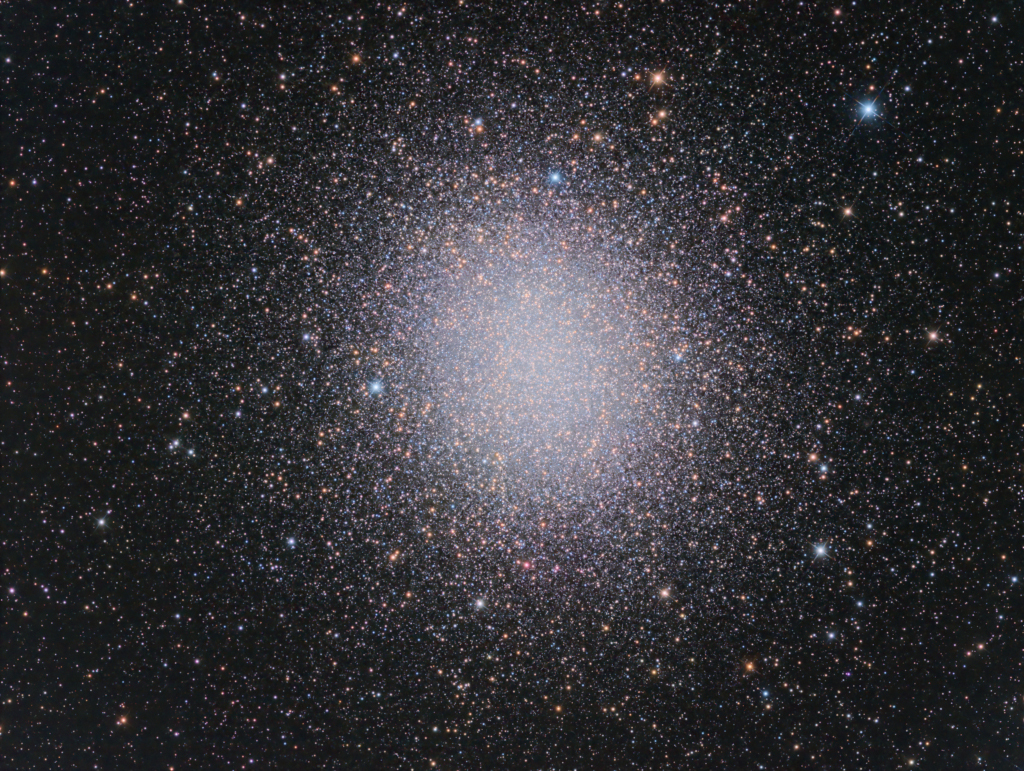
What Happened in Space
Globular star cluster Omega Centauri—often affectionately shortened to Omega Cen—packs about 10 million stars into a sphere roughly 150 light-years across. At a distance of about 15,000 light-years from Earth, it stands as the largest and brightest member of the Milky Way’s globular-cluster family, a grand beacon in the halo among roughly 200 known clusters that orbit our galaxy like stubborn serenades of old stars.
The Science Behind the Scene
This cluster is not your textbook “single-age, single-scoop of metallicity” population. Most star clusters parade uniformity: one age, one chemical fingerprint, one tidy story. Omega Centauri, by contrast, wears multiple hats. It hosts a mosaic of stellar populations that span a surprisingly broad range of ages and chemical abundances. If you scanned its stars with a spectral eye, you’d see a chorus rather than a soloist—an intricate blend of generations, each adding a verse to the cluster’s evolving saga.
Such a complexity has nudged astronomers to propose a provocative origin: Omega Centauri may be the remnant core of a dwarf galaxy that wandered too close to the Milky Way and began merging with us. Caught in the gravitational tide, the outer stars of the ancestral galaxy were stripped away, while its dense center persisted, now forever transformed into the compact cluster we observe. It’s a tantalizing hypothesis that makes Omega Cen not just a stellar laboratory but a possible fossil record of galactic cannibalism in our cosmic neighborhood.
What the Images Reveal
If you peer through a telescope, Omega Centauri presents a striking image. Its overall light carries a warm, yellowish hue, and its red giant stars stand out crisply as you sharpen the view. Those giants, in their luminous late-life glow, punctuate the cluster’s face with ruby-bright anchors, guiding the eye and the imagination alike.
For two decades now, the Hubble Space Telescope has kept watch over this dense congregation of stars, turning the cluster into a high-resolution archive of stellar life. The most intriguing clue to emerge from Hubble’s careful gaze is the whisper of something massive lurking near the center: evidence for a substantial black hole. The idea of a black hole sitting at the heart of a globular cluster is a bold one, inviting questions about how such objects form and survive in environments comparatively denser and more tranquil than the bustling cores of galaxies. If confirmed, this black hole would add another layer to Omega Centauri’s already rich narrative—an anchor point for understanding both cluster dynamics and the possible remnants of ancient galactic parents.
Why the Observation Matters
Omega Centauri’s story invites a chorus of questions about time, gravity, and the messy beauty of cosmic evolution. How do multiple generations of stars arise within a single cluster? How did the cluster’s possible galactic origin influence its chemical tapestry? And what does a central black hole imply for the cluster’s future—and for our broader understanding of how galaxies grow by swallowing one another?
The answers are not all in yet, and that is what makes Omega Centauri so resoundingly compelling. It’s less a single-headed star and more a lyrical, ever-unfolding concert—a place where age, chemistry, and gravity choreograph a performance billions of years in the making. As we sharpen our instruments and extend our gaze, Omega Centauri promises more verses, more mysteries, and perhaps a clearer picture of how such cosmic elders came to be, singable across the vastness of space.
Image via NASA
Sources
Copyright Notice: The image and referenced content remain the property of their respective creators and rights holders. They are used here solely for commentary, discussion, and informational purposes. Please visit the original source links for attribution and additional information.
© 2026 ways4eu.wordpress.com – H.J. Sablotny. All rights reserved. The text content of this article is the intellectual property of H.J. Sablotny and may not be reproduced, distributed, or republished without permission. Images remain the property of their respective copyright holders and are used for illustrative and commentary purposes only.