Ways4eu WordPress.com Blog
SPA View of ways4eu.wordpress.com
Nightlight Bingo: An Itty-Bitty Look at Earth from the ISS
By Kinda Cool
on Tue Sep 29 2026
What Happened in Space
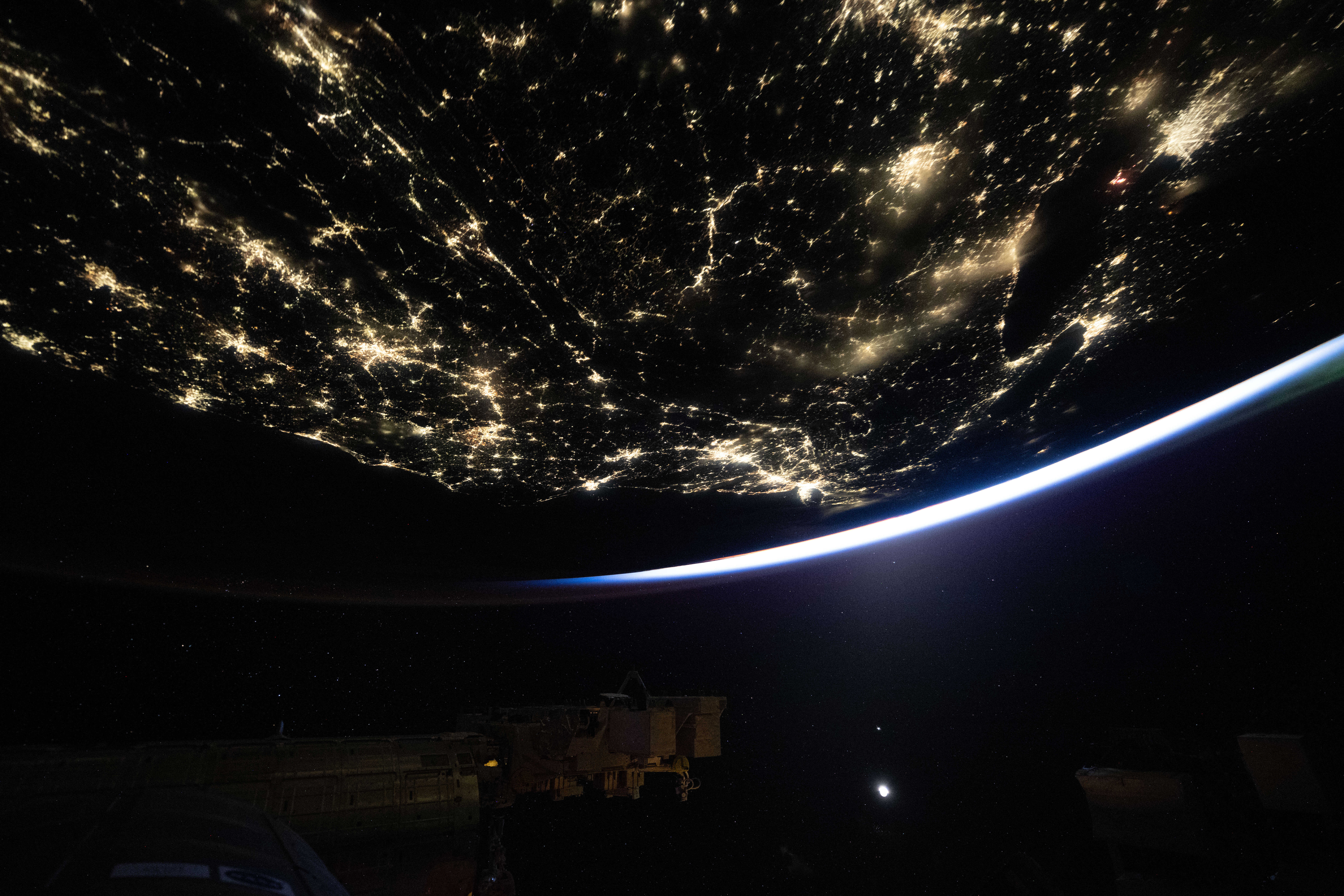
If you’ve ever wondered what the United States looks like when it’s decided to pretend it’s a giant string of LED fairy lights, you’re in the right orbit. From 259 miles above the planet, the International Space Station (ISS) wheeled by like a sleepy tourist on a sky-high scavenger hunt, snapping a shot of a country that never sleeps—well, except for the occasional power outage from a thunderstorm or a stubborn neon sign that refuses to quit.
This nighttime view is a glittering carpet of city lights, each pinprick a story of a neighborhood, a commute, a late-night pizza run, and probably a few cat videos uploaded to the cloud at the exact moment the photo was taken. The vantage point is toward New York City, centered in the frame, a beacon of culture, skyscrapers, and enough energy to power a small moon all by itself. It’s a reminder that even from space, New York can be the party’s centerpiece, the metronome for a nation’s nocturnal heartbeat.
The Science Behind the Scene
Imagine the ISS cruising along at approximately 3:40 a.m. local time, like a cosmic courier delivering a panoramic postcard. The craft circles the globe every 90 minutes, which means this view isn’t exactly a one-off—the Earth has a whole nightly gallery, and we’re just picking a frame from the lobby wall. From up there, the lights aren’t mere decoration; they’re a map of humanity’s bustling, stubborn, wonderful grid. And yes, those lines of bright streets tell stories: late-night diners opening doors, emergency routes mapped in a flicker of amber, and the stubborn glow of cities that insist on being seen from every corner of the planet.
There’s something deliciously surreal about watching country-scale constellations of urban glow while your day job is literally being a high-altitude orbiting kitchen timer. The lights below resemble a living circuit board, where every city is a glowing node connected by the electricity of millions of lives waking, working, and wandering. If you squint, you might even imagine a tiny, invisible GPS breadcrumb leading you to the next great American road trip—or at least to a legendary roadside diner with a crust so thick you could cushion an asteroid on it.
What the Images Reveal
Yet for all the awe-inspiring scale, this view lands with a wink of humor. From above, the United States looks like someone spilled a handful of glow sticks across the map and called it a nightlight. The brightness isn’t uniform; some patches glow with the confidence of a big city’s nightlife, while others glow more like a small town’s late-blooming dreams. In the middle of it all, New York City holds court, a metropolitan sun that never truly sets in the public imagination, even if the actual sun is probably over a different hemisphere by then.
If you’re into numbers (and who isn’t when you’re orbiting), this scene is a gentle reminder of perspective. Being 259 miles up means you’re close enough to feel the warmth of a city’s glow without being able to pop over for a cup of coffee. It’s a reminder that the planet is a shared stage, and we’re all audience and actors at the same time: the lights tell us when a city is alive, when a neighborhood is awake, and when someone decided to leave the oven on a tad too long. The view is at once scientific and playful—proof that space has heart, humor, and a surprising knack for making us feel both infinitesimal and part of something grand.
Why the Observation Matters
So, here’s to the nighttime panorama that turns the United States into a constellation of human-made stars. To the center-stage glow of New York City and the rest of the country cheering from below. To the ISS captain who probably muttered, “Nice shot,” as the camera clicked, and to everyone under those lights who knows that even in the dark, we’re shining—together, one luminous patch at a time.
Image via NASAhttps://ift.tt/Q7NeYS6
Copyright Notice: The image and referenced content remain the property of their respective creators and rights holders. They are used here solely for commentary, discussion, and informational purposes. Please visit the original source links for attribution and additional information.
© 2026 ways4eu.wordpress.com – H.J. Sablotny. All rights reserved. The text content of this article is the intellectual property of H.J. Sablotny and may not be reproduced, distributed, or republished without permission. Images remain the property of their respective copyright holders and are used for illustrative and commentary purposes only.