Ways4eu WordPress.com Blog
SPA View of ways4eu.wordpress.com
Cosmic Whodunit: Hubble Unmasks a Second-Generation Planet in a White Dwarf’s Quiet Neighborhood
By Kinda Cool
on Wed Oct 07 2026
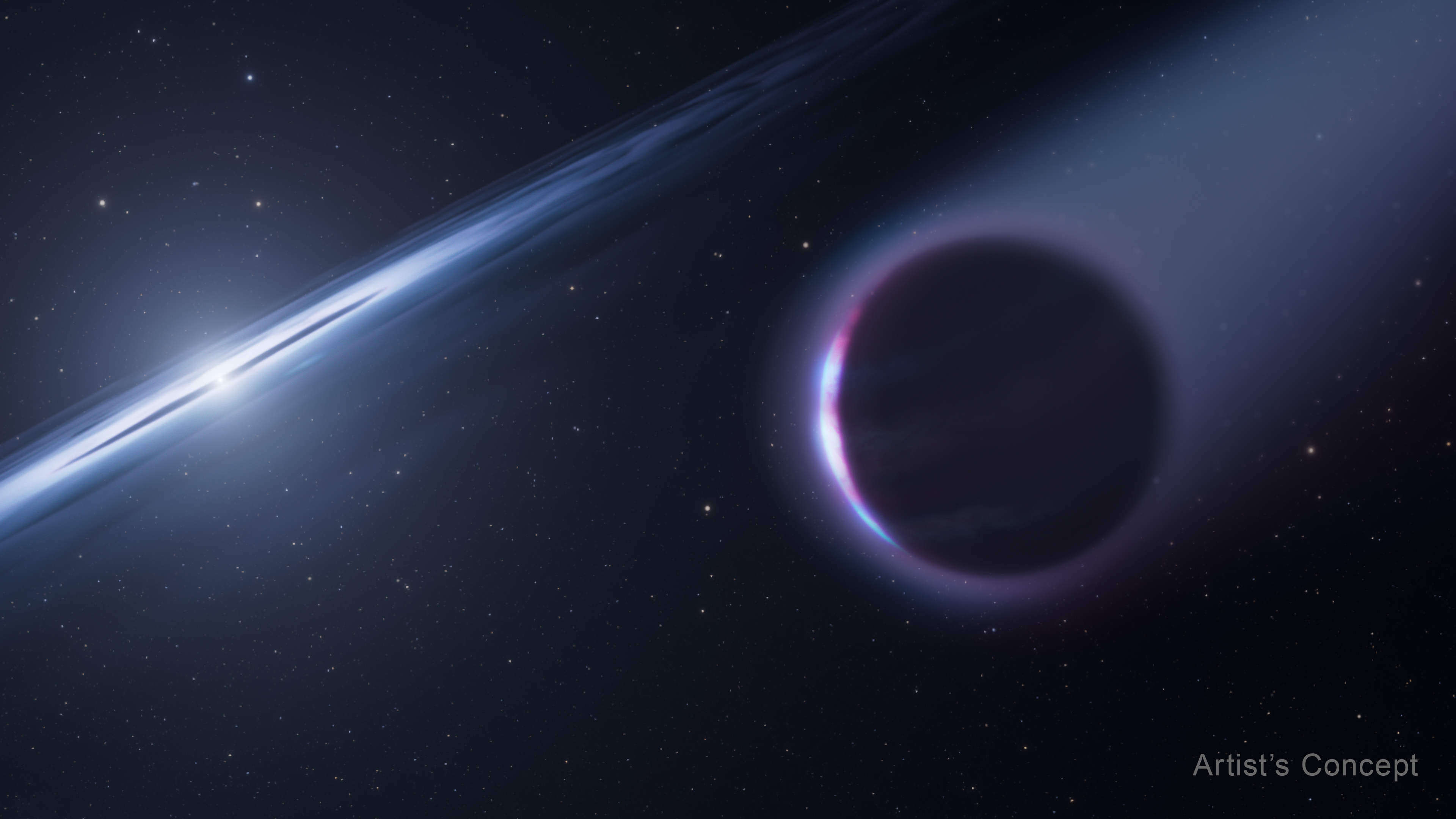
The White Dwarf Planet Mystery
You never forget your first planet. But what do you do when your star decides to retire early, shed its planetary entourage, and leave behind a glittering, extinguished-sparkle relic called a white dwarf? In the latest episode of “Astronomers Solve Cosmic Cold Case,” NASA’s Hubble Space Telescope swooped in like a well-meaning, gravity-wobbling detective and uncovered clues that have the universe buzzing, or at least buzzing at a slightly lower frequency than usual because space is big and cold and mostly silent.
The scene: HS 0209+0832, a binary-ish afterparty where a white dwarf and whatever survived the star’s dramatic makeover mingle under the harsh light of the cosmos. The case file? Unusual chemical abundances detected by Hubble that didn’t quite fit the usual suspects: iron, magnesium, calcium, and a sprinkle of other cosmic confetti that didn’t quite come from the expected stellar neighborhood. It looked suspiciously like someone (or something) had been chewing on rocks and regurgitating secondhand planetary material. The kind of material you’d expect if a planet had been, let’s say, consumed and then reincarnated as a ghostly buffet for the remaining stars.
Hubble Evidence and Stellar Afterlives
Here’s where the plot thickens with a dash of whimsy: the leading theory isn’t that a rogue asteroid belt threw a party and forgot to send invitations. No, folks, the evidence points toward a second-generation planet orbiting the white dwarf. In plain terms: a planet that formed after the star had already become a white dwarf, out of the material that was left behind in the cosmic aftermath. It’s like the star went through a midlife crisis, shed the old décor, and a fashion-forward, new planet took up residence in the leftovers—trading the old planetary coordinates for something shinier and more metal-rich.
Why does this matter? Because it challenges the usual chronology of planetary formation. If planets can form around the remnants of dead stars, then the universe has a robust second act policy for planetary life cycles. It’s not just “from dust to planets” in the early chapters; it’s “new planets from the leftovers while the star sips cosmic tea.” And given Hubble’s precision, those chemical fingerprints aren’t just fingerprints; they’re confession notes written in starlight.
The clue-by-clue progression goes something like this: Hubble’s spectroscopic data reveal peculiar abundances that don’t match a simple, single-pass consumption story. The white dwarf’s atmosphere bears the metallic signatures of rocky material—think of it as cosmic jewelry that didn’t come from the star’s own belly, but from something that had a life (and a likely planetary history) of its own. Then, the dynamic puzzle pieces align with the presence of a second-generation planet, formed from the debris in the star’s final act. It’s a celestial scavenger hunt with a surprisingly organized outcome: a planet born from the leftovers, orbiting the white dwarf, and giving astronomers a rare, near-cilent view into the afterlife of planetary systems.
Why Second-Generation Worlds Matter
If you’re wondering what a second-generation planet looks like in the real world (as real as space permits, which means “in our imaginations, with a generous dash of physics”): picture a petite world that formed not from the primordial dust of a newborn star, but from the breadcrumbs left behind after a star’s dramatic finale. It’s like a crust made of starlight crackers, perhaps with a garnish of metals that tell a story about where it came from and what it ate along the way. The chemistry acts as exhibit A, B, and C in a mystery that spans millions of years and light-years, but the verdict remains tantalizingly clear: there’s more to planetary life cycles than we once assumed.
As for what this means for future cosmic stakeouts: Hubble’s data enable us to read the atmosphere of dead-dwarfed systems as if they were crime-sc scenes, each spectral line a potential suspect. The idea of second-generation planets expands the universe’s suspect pool and offers fresh theories about how planetary systems survive, adapt, and sometimes regenerate after a star’s grand finale. It’s a reminder that the cosmos loves a good plot twist and that even in the quiet corners of space, there can be a second act—complete with a new world orbiting the still, watchful eye of a white dwarf.
So here’s to the astronomers who treated the cosmos like a diary and the Hubble telescope like a magnifying glass with vitamin-enriched attention to detail. The HS 0209+0832 case isn’t solved with a single neat ribbon; it’s a mosaic of chemical signatures, orbital dynamics, and a hopeful hypothesis about second-generation planets. It’s not just science fiction turned real—it’s science reality wearing a lab coat and delivering a press-ready plot twist.
What the Discovery Adds to Exoplanet Science
If you’re itching to discuss this over coffee, you’ll want to bring a map of spectral lines, a dash of humor, and a keen sense for cosmic leftovers. Because in the end, the universe isn’t just expanding; it’s hosting ongoing mysteries about how planets can be born again from stardust, set into orbit around a star that refused to throw in the towel. And that, my friend, is exactly the kind of cold case that deserves a big, cosmic round of applause from the audience in the back row of the Milky Way.
Image via NASA https://ift.tt/3TnlqsI
Copyright Notice: The image and referenced content remain the property of their respective creators and rights holders. They are used here solely for commentary, discussion, and informational purposes. Please visit the original source links for attribution and additional information.
© 2026 ways4eu.wordpress.com – H.J. Sablotny. All rights reserved. The text content of this article is the intellectual property of H.J. Sablotny and may not be reproduced, distributed, or republished without permission. Images remain the property of their respective copyright holders and are used for illustrative and commentary purposes only.