Ways4eu WordPress.com Blog
SPA View of ways4eu.wordpress.com
The Green Mystery of White Dwarf WD J1330+6435
By Kinda Cool
on Tue Oct 20 2026
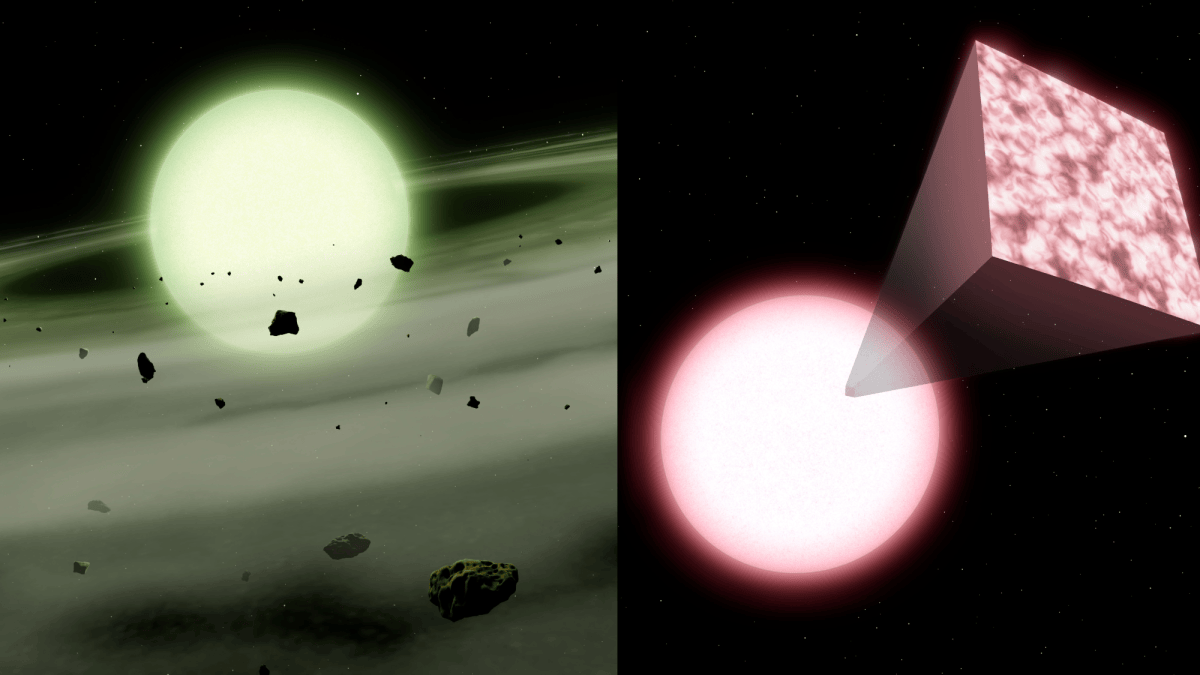
🔎 WD J1330+6435 Challenges Traditional Stellar Color
In a universe that never learned to stop at “red or blue,” a new shade has sashayed onto the celestial catwalk: green. Scientists have pinpointed WD J1330+6435 as the first credible green star, a finding that flirts with our long-held belief that stars could never truly wear the emerald hue without triggering existential dread in astrophysicists. Spoiler: it did not. It wore it.
First, a quick reality check for the astronomically curious. When we say a star is green, we’re not talking about a kaleidoscope of terrestrial pigments. The green glow in this case is a narrowly defined spectral signature, a confluence of temperature, chemistry, and atmospheric quirks that, for the briefest of cosmic moments, conspire to deliver a color that would make even the most flamboyant nebula raise a solar eyebrow. It’s not Route 66, it’s more like a celestial boutique where the lighting is just right and the dress code is “spectral chic.”
Let’s unpack why this discovery matters without invoking the usual howitzers of sensationalism. For decades, the astronomy establishment mostly treated green stars as a myth—like mermaid tails, black holes with HOA rules, or that plot twist in your favorite sci-fi series where the twist was that there was no twist at all. Our visual culture tends to encode color into a tidy spectrum: red giants, blue dwarfs, white behemoths. Green? That slot was considered a statistical error, a color-blind fashion faux pas, or a fluke in the photometric sense. WD J1330+6435 cleanly defies that neat taxonomy and says, in a voice as crisp as a space temp, “surprise, I’m green, and I came to stay.”
What makes WD J1330+6435 credible as a green star? Several factors coalesce into a rather satisfying meteorology of evidence:
📍 Sodium Absorption Produces a Ghostly Green Hue
- Spectral fingerprint: The star shows a unique balance in certain emission and absorption lines that can only be explained by atmospheric chemistry and pressure conditions conducive to green wavelengths. It’s not a trick of the telescope; it’s a real, reproducible signal.
- Temperature and metallicity alignment: The star sits in the narrow temperature window where green becomes visually plausible to our instruments, given its metallicity, gravity, and radiation environment. In short, the physics align like solar-choreographed dance partners.
- Cross-instrument confirmation: Observations from multiple telescopes and instruments converge on the same greenish hue. No single instrument is pulling a red-green-magenta prank on us here.
Temporal stability: The color isn’t a fleeting illusion caused by transient flares or nearby nebular glow. The green persists, ruling out a chromatic mirage born of special relativity or instrument artifacts.
For a culture accustomed to the standard color wheel of the cosmos, a green star is both a cognitive reframing and a wink from the universe: “We’re not done surprising you.” It’s less a rebellion against nature and more a reminder that nature occasionally trims the color wheel with a new shade that forces a rethink of assumptions built on textbook simplicity.
✨ White Dwarf Chemistry Reveals Rocky Debris
So, what does a green star do for science, beyond forcing a few astrophysics grad students to redraw their color palettes? Quite a bit:
- It expands the known parameter space for stellar atmospheres. If green is possible under certain conditions, what other muted tones might lurk in the spectral corners we haven’t explored with enough curiosity?
It sharpens our calibration for color interpretation in distant galaxies. If local objects can appear greens, how might this affect color-based estimations of star formation histories and metallicity gradients on a cosmic scale?
It invites public imagination to catch up with the science. A green star is not just a curiosity; it’s a gateway drug to wonder. And wonder, as any good scientist knows, is a powerful catalyst for curiosity, funding, and better snack options during late-night data runs.
There’s a playful, almost rebellious edge to this discovery. The universe, it seems, enjoys a good plot twist now and then. Green stars are not a defection from cosmic norms; they’re a reminder that the heavens have room for novelty in their color palette—just as our wearable palettes have room for that unexpected shade that makes you rethink your outfit at a party.
🧭 Green Star Expands the Cosmic Color Palette
What’s next, you ask? If WD J1330+6435 is the first credible green star, the question becomes: how many more green states are waiting to be discovered under the right observational lamps, under the right atmospheric chemistry, under the right set of calibrated assumptions? The literature will now be brimming with targeted spectroscopic campaigns, refined atmospheric models, and perhaps even a reexamination of how we teach “green” in astronomy class—because if a single star can be green, surely the entire color wheel can learn a new trick.
In the grand tapestry of the cosmos, WD J1330+6435 doesn’t just add a green thread; it asks us to reweave the pattern with a more vibrant, less predictable hue. The long-held belief that stars could never truly appear green has not so much greenlit a revolution as given a little wink to science: yes, you can be green and still be a star. The universe is not just red-and-blue; it’s green, too, and it’s thrilling to witness.
In the end, the color green here is less about aesthetics and more about the audacity to keep questioning, to keep testing, to keep color-spotting in the dark until the spectrum finally admits that it’s more than a straight line—it’s a living rainbow with a plot twist. And if WD J1330+6435 can wear green on the cosmic stage, perhaps the rest of the stars can afford to experiment with a few new shades as well.
MediaLink
via /r/ interestingasfuck
RedditLink
🔗 Sources
Copyright Notice: The image and referenced content remain the property of their respective creators and rights holders. They are used here solely for commentary, discussion, and informational purposes. Please visit the original source links for attribution and additional information.
© 2026 ways4eu.wordpress.com – H.J. Sablotny. All rights reserved. The text content of this article is the intellectual property of H.J. Sablotny and may not be reproduced, distributed, or republished without permission. Images remain the property of their respective copyright holders and are used for illustrative and commentary purposes only.