Ways4eu WordPress.com Blog
SPA View of ways4eu.wordpress.com
WD J1330+6435: The First Green Star?
By Kinda Cool
on Fri Oct 23 2026
🔭 WD J1330+6435 Challenges Familiar Stellar Colors
Astronomers usually read a star’s visible color as a clue to its temperature, but WD J1330+6435 presents a rarer puzzle: a white dwarf whose polluted atmosphere may give its light a distinctly greenish appearance.
Star light, star bright—is there a green star out tonight?
🌈 Stellar Temperatures Explain Most Visible Colors
Most stars appear as tiny points in the sky. They’re usually white, though some look distinctly red or blue. That color is a clue to a star’s temperature: blue stars are hotter than red ones.
But what about green?
🪨 Rocky Debris Alters the White Dwarf’s Light
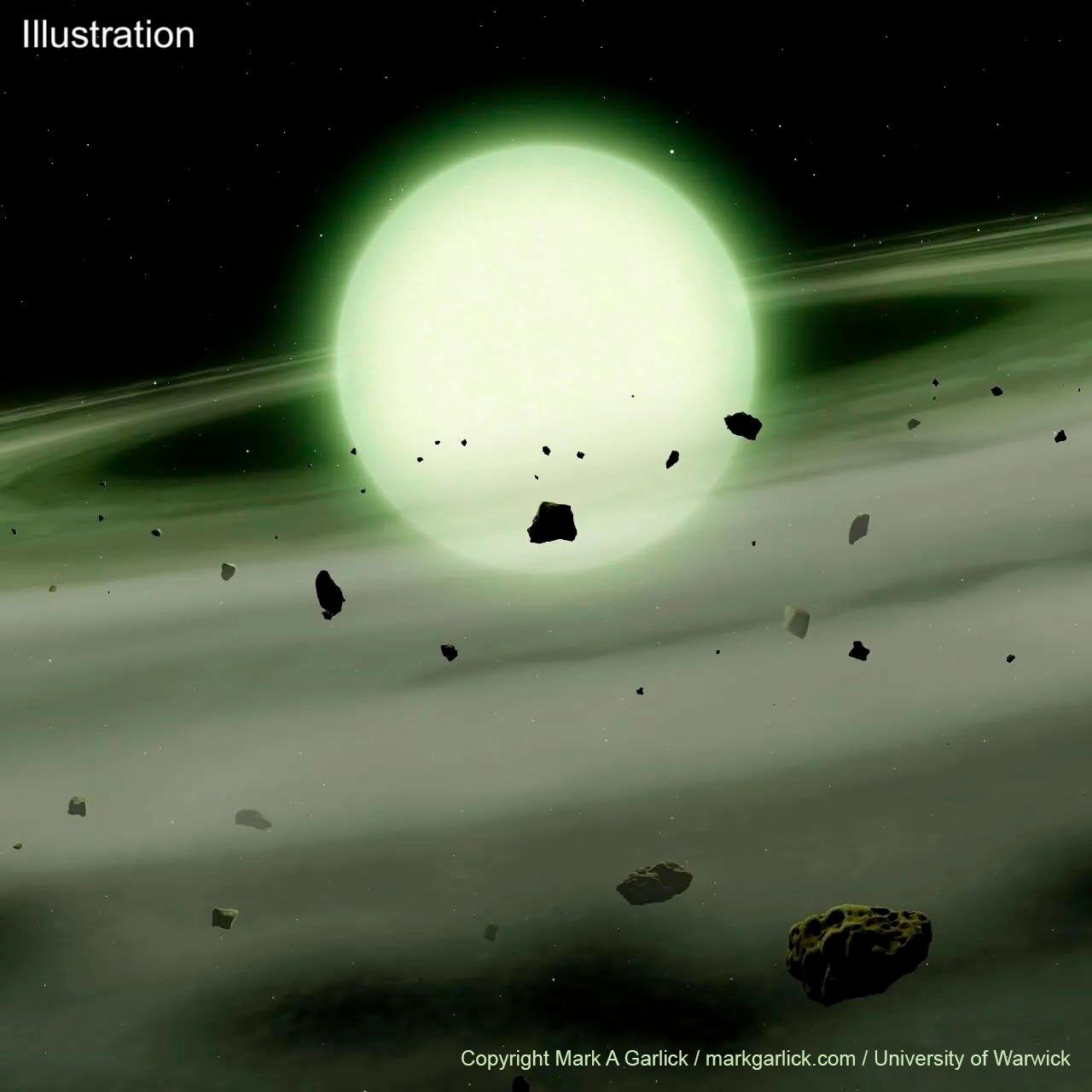
The featured illustration shows WD J1330+6435, a white dwarf surrounded by a disk of gas and rocky debris. White dwarfs are the small, faint remnants left behind when stars like our Sun run out of nuclear fuel. Despite their name, some white dwarfs may appear yellow, green, cyan, pink, or purple.
Their unusual hues come from trace elements that have fallen onto the stars and interact with their atmospheres, shifting the light we see. So WD J1330+6435 may be among the first stars identified with a greenish appearance—but don’t expect to spot it with the naked eye. It’s far too faint.
🌌 The Green Star Remains Beyond Naked-Eye View
I wish I may, I wish I might… but this green star won’t be shining in your backyard tonight.
Tomorrow’s picture: Eye in the sky
Image via NASAhttps://ift.tt/U3FlHjA
Copyright Notice: The image and referenced content remain the property of their respective creators and rights holders. They are used here solely for commentary, discussion, and informational purposes. Please visit the original source links for attribution and additional information.
© 2026 ways4eu.wordpress.com – H.J. Sablotny. All rights reserved. The text content of this article is the intellectual property of H.J. Sablotny and may not be reproduced, distributed, or republished without permission. Images remain the property of their respective copyright holders and are used for illustrative and commentary purposes only.