Ways4eu WordPress.com Blog
SPA View of ways4eu.wordpress.com
RS-25 Engine Test at NASA Stennis
By Kinda Cool
on Sat Oct 24 2026
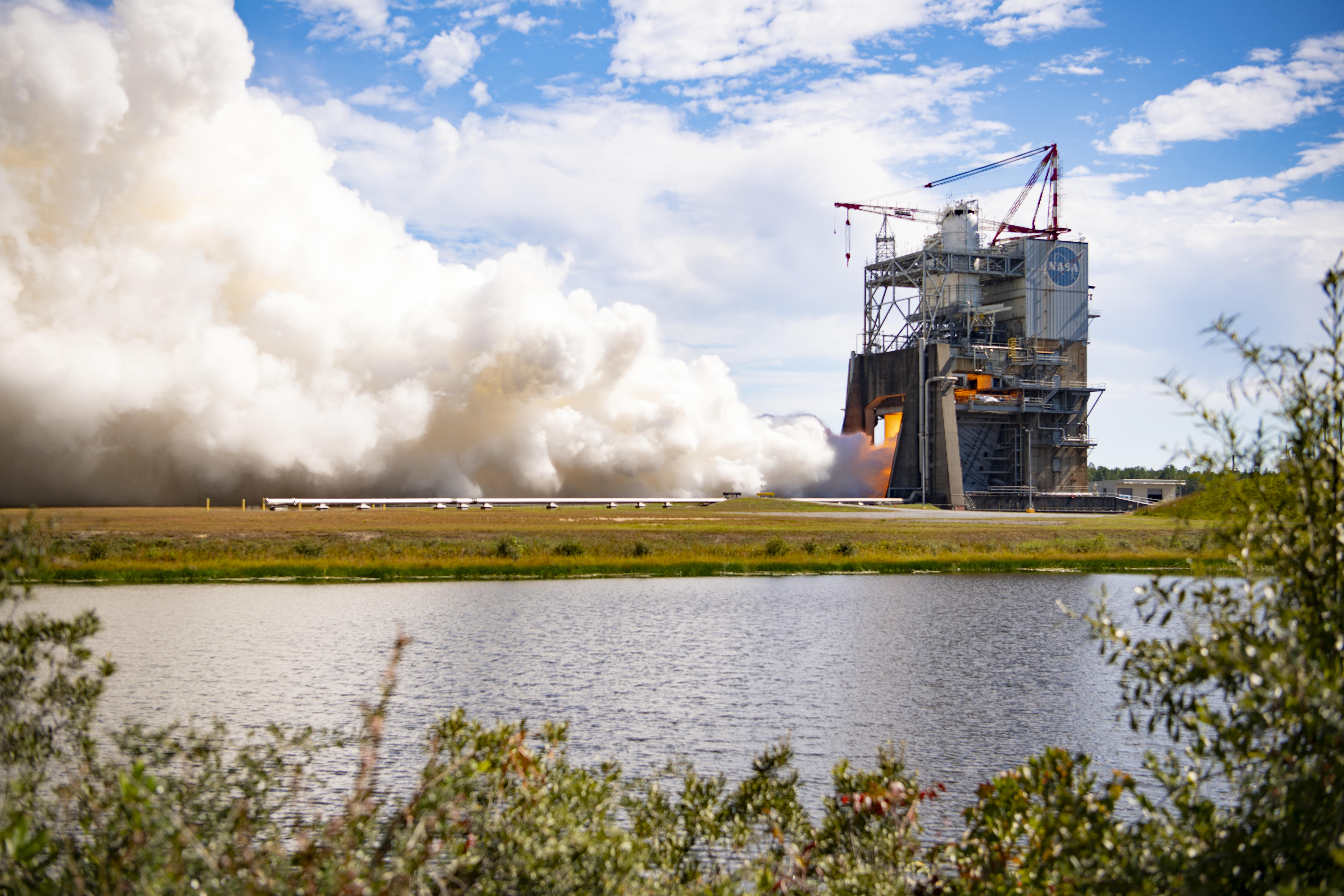
🚀 RS-25 Engine 10001 Faces Its Hot-Fire Test
A hot-fire run begins long before ignition. Teams prepare the stand, inspect connections, check instrumentation, establish safety zones, and rehearse procedures until even the contingency plans have contingency plans. Liquid hydrogen and liquid oxygen are not substances that reward improvisation. When the countdown reaches zero, the visible plume is only the loudest part of a carefully choreographed operation involving valves, pumps, computers, cameras, and people watching screens with professional calm. The public sees a wall of vapor and flame; the control room sees hundreds of channels asking whether reality agrees with the design. It is spectacular because the engineering is disciplined, not because anyone decided Tuesday needed more thunder.
On October 21, 2026, teams at NASA’s Stennis Space Center near Bay St. Louis, Mississippi, tested RS-25 engine No. 10001. A hot-fire test is exactly what it sounds like: engineers secure the engine to a stand, feed it propellants, ignite it, and listen carefully while several definitions of “quiet workplace” leave the county. The spectacle is dramatic, but the purpose is disciplined measurement rather than theatrical smoke. For one afternoon, “turn it up and see what happens” becomes a respectable engineering procedure.
🏭 Stennis Tests Hardware for the Space Launch System
The test stand changes the risk equation. On the ground, engineers can surround the engine with sensors, stop a run if necessary, and examine the hardware afterward without first retrieving it from somewhere inconveniently orbital. They can reproduce demanding conditions while keeping the experiment accessible. That does not make the test gentle: an RS-25 operates under extreme pressures and temperatures, and every subsystem must work in sequence. But it makes the violence measurable. Stennis turns raw power into evidence, which is what separates a rocket program from a very expensive bonfire. The concrete structure may look industrial, yet its real product is confidence—delivered in terabytes, checklists, and one unforgettable roar.
The RS-25 helps power NASA’s Space Launch System, the heavy-lift rocket developed for Artemis missions beyond low Earth orbit. Testing takes place on the Fred Haise Test Stand, where the engine can demonstrate its manners before anyone bolts it beneath a rocket. Ground facilities let teams monitor pressures, temperatures, vibration, thrust, and other behavior under controlled conditions. It is a dress rehearsal, except the lead performer breathes fire and does not accept flowers afterward. It is quality control with cryogenic propellants, which makes the office checklist look rather underqualified.
📊 Engine Data Supports Future NASA Missions
Engineers study trends as carefully as headline numbers. A peak value may look impressive, but stability, timing, vibration, thermal behavior, and repeatability tell the deeper story. Sensors reveal whether components are merely surviving or performing with the margins expected for future missions. Analysts compare measurements with simulations, investigate anomalies, and update models. That work lacks the instant drama of ignition, but it is where a test earns its keep. A clean graph can prevent a later failure; an untidy graph can expose a question while the engine is still reachable. In aerospace, suspicious squiggles are not artistic expression. They are invitations to several meetings and, if necessary, a redesigned part.
Every sensor reading helps engineers evaluate how the hardware performs and whether components behave as expected. That test data supports decisions about future engines and missions, turning a few thunderous minutes into months of useful analysis. Engineers do not merely ask whether an engine ran; they examine how steadily it ran, how systems responded, and whether the numbers match the models. Rocket science occasionally looks like flame and thunder, but much of it arrives later as graphs refusing to explain themselves without a meeting. Every useful squiggle on a graph is thunder translated into homework for people wearing safety glasses.
🔥 Rocket Noise Becomes Music for Engineers
There is also a cultural reason these tests attract attention. Rocket engines compress abstract ambition into something physical: metal is chilled, fuel flows, structures tremble, and a plume announces that equations have entered the noisy phase of their career. Watching the test connects future lunar missions with present-day labor by welders, technicians, analysts, safety teams, and engineers. No single person “fires the engine” in the heroic sense; an organization prepares the conditions in which the hardware can prove itself. The applause belongs to coordinated competence—and perhaps to everyone who remembered to secure the loose objects before several hundred thousand pounds of thrust joined the conversation.
The RS-25 also carries history into a new program. Its design lineage is associated with the Space Shuttle era, while current versions and production plans support the Space Launch System. Reusing proven ideas does not mean simply dusting off old hardware. Manufacturing methods, mission requirements, supply chains, and operating profiles change, so qualification and acceptance testing remain essential. Spaceflight is fond of heroic launch images, but reliability grows through repeated, less glamorous acts: inspecting, measuring, documenting, correcting, and testing again. The engine may be destined for the sky, yet its credibility is built while firmly attached to Mississippi. Before a rocket can make history, it must first make engineers pleasantly bored by predictable data.
Stennis has tested propulsion systems for generations, making controlled noise part of its institutional vocabulary. For the public, a hot fire is a spectacular reminder that spaceflight begins on the ground. For aerospace engineers, it is verification: hardware, software, plumbing, and people working together before launch day raises the stakes. Engine 10001 may have spent October 21 making an enormous racket, but in rocket development, the best noise is the kind that produces clean data. The engine’s performance review is loud enough for the surrounding landscape to receive a copy.
Copyright Notice: The image and referenced content remain the property of their respective creators and rights holders. They are used here solely for commentary, discussion, and informational purposes. Please visit the original source links for attribution and additional information.
© 2026 ways4eu.wordpress.com – H.J. Sablotny. All rights reserved. The text content of this article is the intellectual property of H.J. Sablotny and may not be reproduced, distributed, or republished without permission. Images remain the property of their respective copyright holders and are used for illustrative and commentary purposes only.