Ways4eu WordPress.com Blog
SPA View of ways4eu.wordpress.com
RS-25 Engine Tests at NASA Stennis
By Kinda Cool
on Sun Oct 25 2026
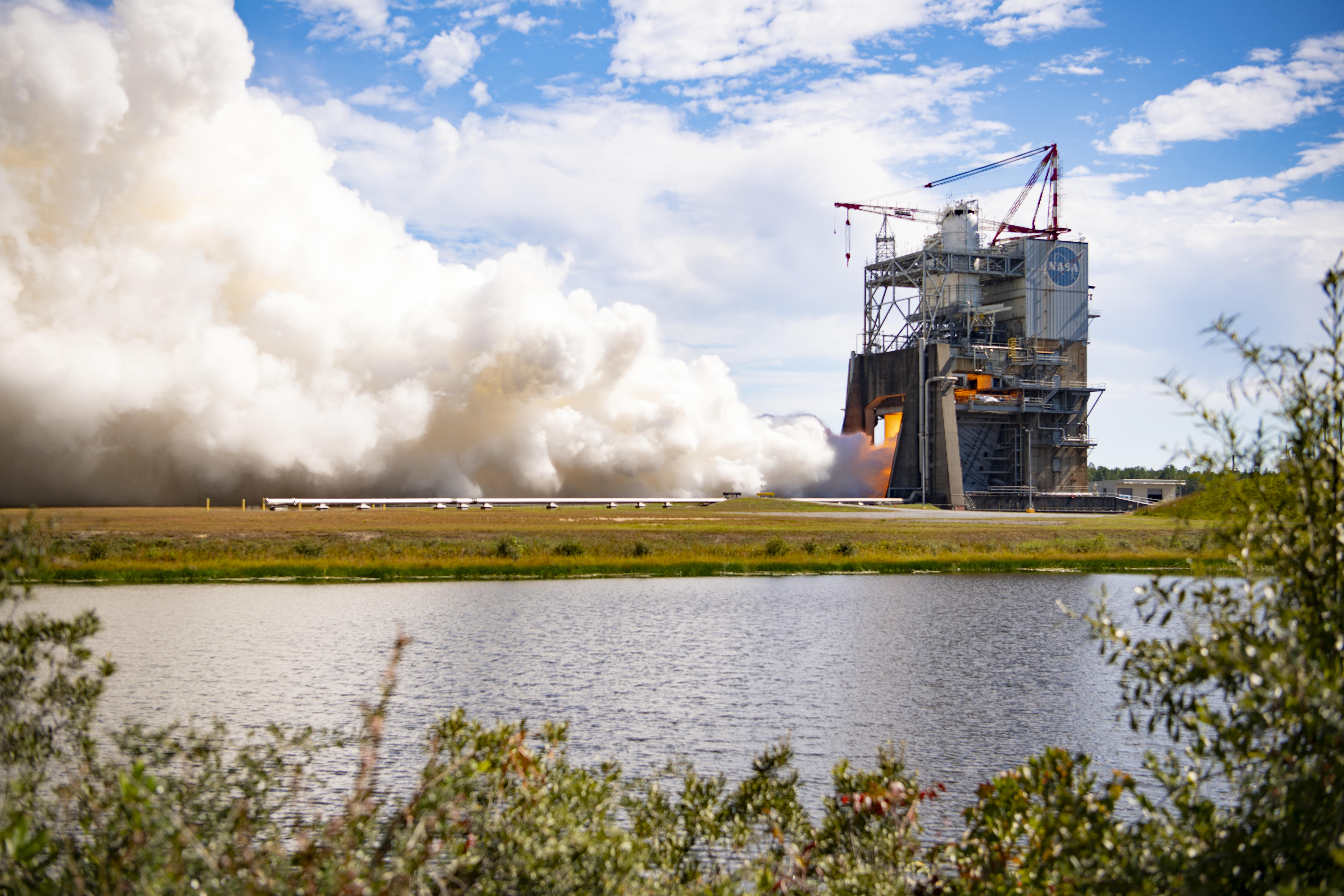
🔥 RS-25 Engine 10001 Faces Its Hot-Fire Test
On Oct. 21, 2026, teams at NASA’s Stennis Space Center near Bay St. Louis, Mississippi, tested RS-25 engine No. 10001. It was a big day for a powerful piece of rocket hardware—and, for the engine, probably a rather loud one.
A hot-fire test is far more controlled than the pictures suggest. Long before ignition, crews inspect connections, prepare the stand, establish safety zones and make sure the instrumentation is ready to notice everything from a small pressure change to a very large bad idea. The engine is then supplied with liquid hydrogen and liquid oxygen, a pairing that rewards precision and has little patience for improvisation. When combustion begins, the plume, steam and thunder provide the theatre, but the real audience is watching screens. Engineers want to know how pumps, valves, temperatures, pressures and structures behave together under realistic loads. The point is not simply to prove that the engine can make noise; a dropped toolbox could manage that with a much smaller budget. The point is to make the engine perform predictably, repeatedly and within carefully defined limits. Engine 10001 therefore faced something closer to a medical examination conducted by hundreds of sensors—if medical examinations normally involved a flame trench and ear protection.
🚀 NASA’s Space Launch System Relies on RS-25 Power
The RS-25 helps power NASA’s Space Launch System, the rocket built to send astronauts and cargo beyond Earth’s orbit. Before engines can do their work in space, they’re tested on the ground at Stennis, where teams can put them through their paces in a controlled setting. It’s a little like a dress rehearsal, except the star performer produces enough thrust to make “please project your voice” unnecessary.
The RS-25 carries an unusually long engineering biography. Its design descends from the engines that powered the Space Shuttle, where performance, reliability and the ability to operate across demanding conditions were essential. For the Space Launch System, four RS-25 engines work together at the base of the core stage while solid rocket boosters provide additional thrust during the opening portion of flight. That arrangement turns a launch into an exercise in tightly choreographed cooperation: engines, boosters, tanks, computers and ground systems must all agree on the same very busy plan. Heritage helps, but it does not remove the need for current testing. Hardware changes, manufacturing evolves, missions impose fresh requirements and even familiar components must demonstrate that they belong in the new configuration. Calling an engine “proven” is not a permission slip to stop asking questions. In aerospace, confidence is built from evidence, not from fond memories and a framed photograph of the Shuttle on the office wall.
📊 Stennis Engineers Turn Engine Noise into Data
Testing engine No. 10001 gives teams another opportunity to gather data and evaluate RS-25 hardware. That work helps support NASA’s plans for future missions, while the Stennis test teams keep doing what they do best: carefully preparing engines for the moment when the countdown is no longer a rehearsal.
The engine may have spent Oct. 21 making a tremendous racket, but in rocket development, that noise is music to the engineers’ ears.
During the firing, sensors transform apparent chaos into numbers that can be compared with predictions. Thrust, vibration, flow, pressure and temperature traces allow specialists to see whether the engine followed the expected script or improvised a line nobody remembers approving. Afterwards, teams study the data, inspect the hardware and investigate even small deviations. This is where a successful test can become wonderfully anticlimactic: the most exciting conclusion may be that every graph was boring in precisely the correct way. Spectators remember the roaring plume, while engineers may celebrate a stable reading that barely wiggles. Both reactions are reasonable; one simply has more spreadsheets. The analysis also feeds future decisions about operating margins and readiness. A few minutes on the stand can generate far more work than the firing itself, because rocket development treats every measurement as a witness. Some witnesses are dramatic, some are quiet, and all of them are asked to repeat exactly what happened.
🛰️ Ground Testing Prepares Future Artemis Missions
Ground testing matters because launch day is a terrible time to discover a personality quirk. At Stennis, teams can examine an engine in a fixed, instrumented setting, rehearse procedures and learn while the hardware remains accessible. That preparation supports Artemis missions whose success depends on thousands of individual systems doing their jobs at the correct second. No single test guarantees an entire mission, but each one removes uncertainty and adds evidence. It also demonstrates the less glamorous side of exploration: checklists, maintenance, calibration, review meetings and people willing to spend hours discussing a line on a graph. The Moon may be the destination, yet a great deal of lunar exploration begins in Mississippi with test stands, careful hands and a countdown that ends without leaving Earth. The RS-25 supplies the fire; the Stennis teams supply the discipline. Between them, “future mission” becomes slightly less of a slogan and slightly more of a machine ready to work.
What makes the test especially compelling is the contrast between scale and control. The engine produces forces that belong in the language of thunder, yet success depends on tolerances, timings and decisions measured with almost fussy care. That combination runs through spaceflight. Exploration is sold in sweeping images of planets and astronauts, but the machinery reaches those places because somebody checked a valve, verified a sensor and refused to wave away an odd reading. Stennis turns that discipline into a public spectacle for a few minutes, then returns it to the quieter world of reports and reviews. Engine 10001 is not being asked to look impressive; looking impressive is simply what happens when it does its job. The real achievement is reproducibility—the confidence that, when commanded during a mission, the engine will deliver power without adding an original subplot. Rockets already have enough drama. A dependable engine knows when to leave improvisation to musicians and keep the launch firmly on the written score. In spaceflight, disciplined repetition is not dull; it is how astonishing journeys earn permission to begin.
Image via NASA https://ift.tt/d3fVXkZ
Copyright Notice: The image and referenced content remain the property of their respective creators and rights holders. They are used here solely for commentary, discussion, and informational purposes. Please visit the original source links for attribution and additional information.
© 2026 ways4eu.wordpress.com – H.J. Sablotny. All rights reserved. The text content of this article is the intellectual property of H.J. Sablotny and may not be reproduced, distributed, or republished without permission. Images remain the property of their respective copyright holders and are used for illustrative and commentary purposes only.