Ways4eu WordPress.com Blog
SPA View of ways4eu.wordpress.com
CHAPEA Mission 2 Returns From Simulated Mars
By JohnTheWordWhirlwind
on Tue Nov 03 2026
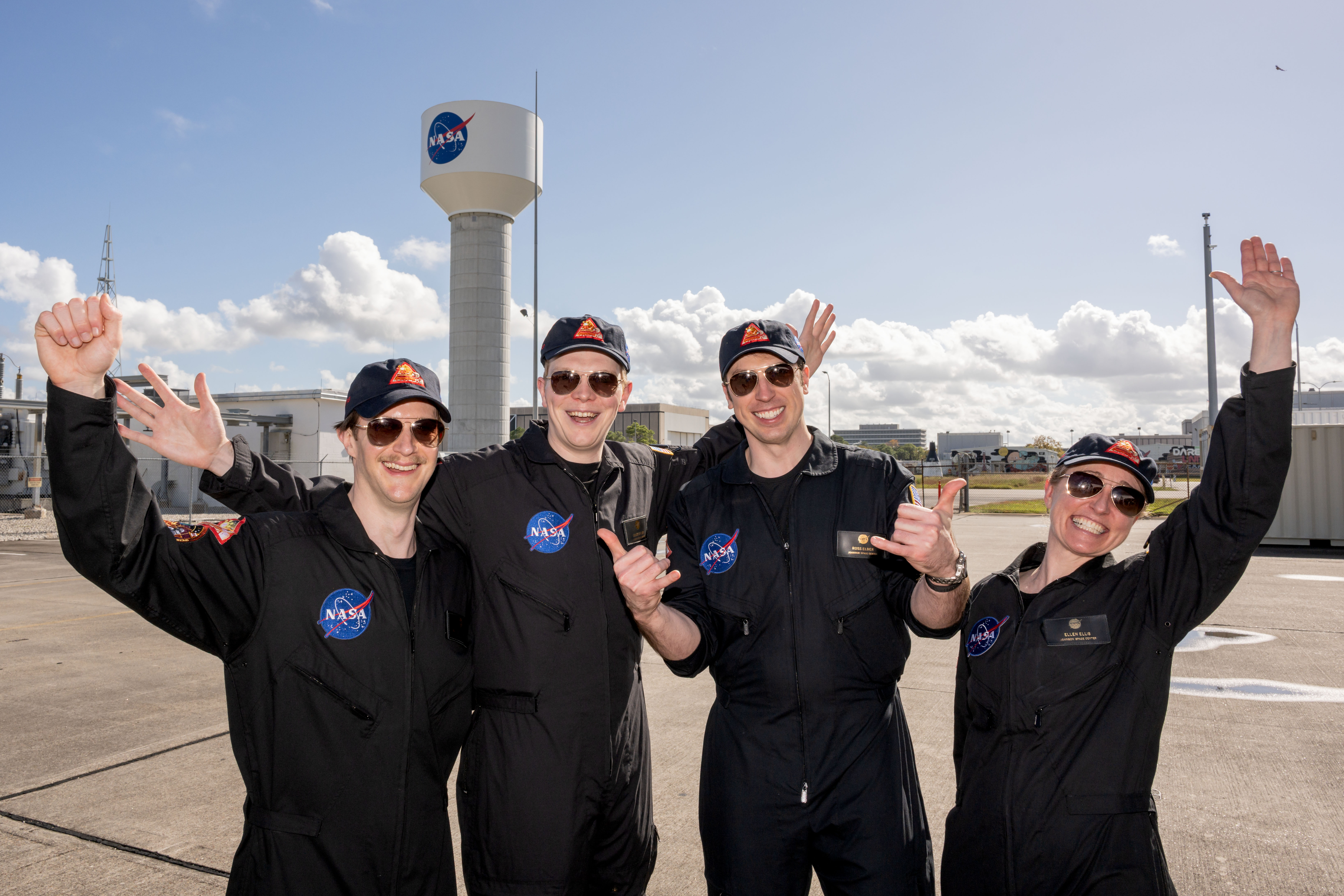
🚪 Four Volunteers Opened the Habitat Door
On 31 October 2026, Ross Elder, Matthew Montgomery, Ellen Ellis and James Spicer stepped out of Mars Dune Alpha at NASA’s Johnson Space Center. They had spent 378 days living and working inside the simulated Martian habitat as CHAPEAMission 2. The crew never left Earth, but the isolation, restricted resources and operational routines were real enough to make an open door a major mission event.
CHAPEA stands for Crew Health and Performance Exploration Analog. An analog reproduces selected conditions of a future mission so researchers can study people and procedures without sending anyone millions of kilometres away. No Earth facility can copy Martian gravity, radiation or complete communication distance, but it can test confinement, workload, food systems and team interaction. The habitat is a laboratory, not a theme park with unusually strict checkout rules.
The crew’s exit produced the familiar language of “returning to Earth,” which is deliberately playful. They were in Houston the entire time, yet daily life had been structured around a Mars scenario. The first outdoor group photograph marked the end of a controlled social world: no simulated surface schedule, no habitat walls and no need to treat every meal as inventory belonging to a mission that still had months to run.
🏠 Mars Dune Alpha Compresses Life Into 1,700 Square Feet
The 3D-printed habitat covers about 1,700 square feet and includes private crew quarters, workstations, medical and recreation areas, a kitchen and hygiene facilities. An adjacent sandbox supports simulated Mars walks using virtual-reality and physical equipment. The layout must provide privacy while keeping the crew close enough to coordinate. Interior architecture becomes part of mission design when “going outside for space” is unavailable.
Crew members performed scientific tasks, maintained equipment, exercised, prepared shelf-stable food and responded to planned challenges. NASA can introduce resource limitations, communication delays, equipment failures and high workloads to observe how the system adapts. The point is not to make volunteers miserable for authenticity. It is to reveal where procedures, schedules or hardware create avoidable strain before real astronauts depend on them far from help.
Confinement changes small annoyances into operational variables. Noise, lighting, storage and cleaning can affect sleep and morale. A badly placed object may irritate the same four people every day for a year. Space agencies therefore study habitability with the seriousness usually reserved for propulsion. A Mars vehicle can have perfect engines and still fail if its crew cannot rest, communicate or find the screwdriver everyone insists was returned to the correct drawer.
🧪 Health Data Matter More Than the Dramatic Exit
NASA collects information on physical health, cognition, sleep, stress, performance and team dynamics. Researchers can compare measurements across mission phases and with other analog crews. The value lies in patterns rather than one volunteer’s anecdote. A difficult week may reflect workload, interpersonal tension, disrupted sleep or experimental conditions, and analysis must separate those factors carefully.
Food is a major research area because long missions limit fresh ingredients and resupply. Menu fatigue can reduce intake even when nutrition is adequate on paper. Crews also need reliable exercise to protect cardiovascular fitness and muscle. CHAPEA examines how routines fit within work demands and how people use limited supplies. Mars may be scientifically exciting, but the body continues filing ordinary requests for sleep, fibre and a reason to move.
Communication delays change teamwork with mission control. On Mars, a message may take several minutes each way, preventing immediate conversation. Simulated delay encourages crews to solve problems independently while ground teams provide support asynchronously. This affects instructions, emergency planning and emotional contact with family. “Can you hear me now?” becomes less a technical complaint than a reminder that the reply was never supposed to arrive yet.
🚀 Analog Missions Reduce Risk Before Launch
CHAPEA is one of several analog approaches used in human-spaceflight research. Undersea habitats, Antarctic stations, isolation chambers and desert field sites each reproduce different aspects of remote missions. No single analog is Mars. Together they reveal how crews perform when space, privacy, supplies and rescue options are constrained. Repeated missions help distinguish a general problem from one group’s unusual experience.
Results can influence habitat design, crew selection, training, food systems and operational schedules. They may identify which tasks require clearer procedures or which resources disappear faster than planners expected. Analog work is valuable precisely because corrections remain possible. Moving a storage rack in Houston is inconvenient. Discovering on Mars that the emergency kit lives behind six months of packaged food would be a stronger design review.
The four Mission 2 volunteers completed more than a year of disciplined participation so future crews can travel with fewer unknowns. Their return photograph is celebratory, but the mission’s real product is data that will take longer to analyse than the doorway took to open. Mars Dune Alpha did not prove that humans are ready for Mars. It did something more useful: it supplied evidence about what readiness will require.
Volunteer selection is therefore part of the experiment. NASA seeks healthy adults with relevant professional backgrounds who can tolerate isolation, follow detailed procedures and contribute to a small team. Screening reduces foreseeable risk, but it also means results describe a carefully selected group rather than every possible traveller. Researchers must avoid claiming that four people represent humanity. Analog missions gain value through repeated crews, comparable measurements and transparent limits.
Ethics and medical oversight continue throughout confinement. Participants provide informed consent, can communicate health concerns and are monitored under approved research protocols. Planned stressors must remain within acceptable boundaries. The goal is not to discover how much discomfort people will endure for a Mars patch; it is to learn which systems protect health and performance. A simulation that injures volunteers would reproduce the wrong part of exploration.
The post-mission period matters too. Debriefing, medical assessment and gradual return to ordinary routines help researchers understand recovery. Crew members must also navigate sudden public attention after a year in a private, controlled environment. Their stories can humanise the programme, but personal impressions should be distinguished from analysed results. The door opened on 31 October; the scientific mission continues in datasets, interviews and the next design meeting.
Comparing Mission 2 with the earlier CHAPEA crew will be especially useful. Repeated protocols can reveal whether a pattern recurs across different personalities and seasons. Differences may identify which outcomes belong to one crew rather than the habitat itself. One year produces compelling testimony; a programme of analog missions begins to produce evidence strong enough for engineering decisions.
🔗 Sources and Further Reading
- NASA: CHAPEA Crew Returns to Earth
- NASA: Completion of Yearlong Mars Simulation
- NASA: CHAPEA Program
- Original NASA image
Copyright Notice: The image and referenced content remain the property of their respective creators and rights holders. They are used here solely for commentary, discussion, and informational purposes. Please visit the original source links for attribution and additional information.
© 2026 ways4eu.wordpress.com – H.J. Sablotny. All rights reserved. The text content of this article is the intellectual property of H.J. Sablotny and may not be reproduced, distributed, or republished without permission. Images remain the property of their respective copyright holders and are used for illustrative and commentary purposes only.